Enzyme supplier for paper deinking mills
Pulprift supports recycled paper mills with practical enzymatic deinking programs built around furnish reality: ONP, OMG, mixed office waste, coated broke, recycled packaging grades, and variable inbound recovered fiber.
Our focus is not a catalog of enzyme names. It is the operating outcome: cleaner ink release, better flotation response, lower stickies load, improved drainage, controlled fiber loss, and a process window your pulping team can actually run.
Enzymatic deinking that fits the mill floor
Recovered fiber changes by bale, season, supplier, print type, coating chemistry, and storage history. Pulprift helps mills select and trial enzyme inputs against those variables, then scale dosing around measurable process indicators.
Typical objectives include:
- Higher post-deinking brightness without overdriving peroxide or caustic
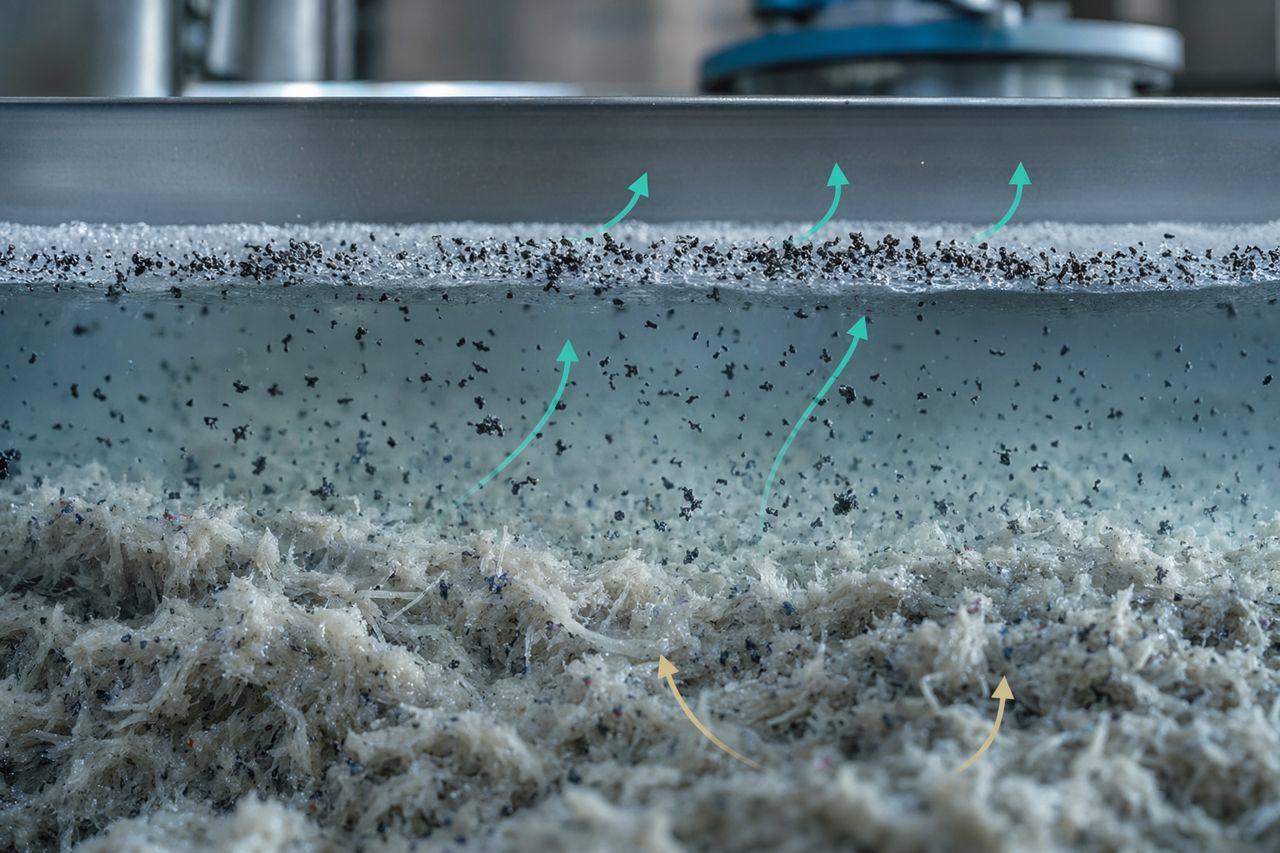
- Improved ink detachment before flotation
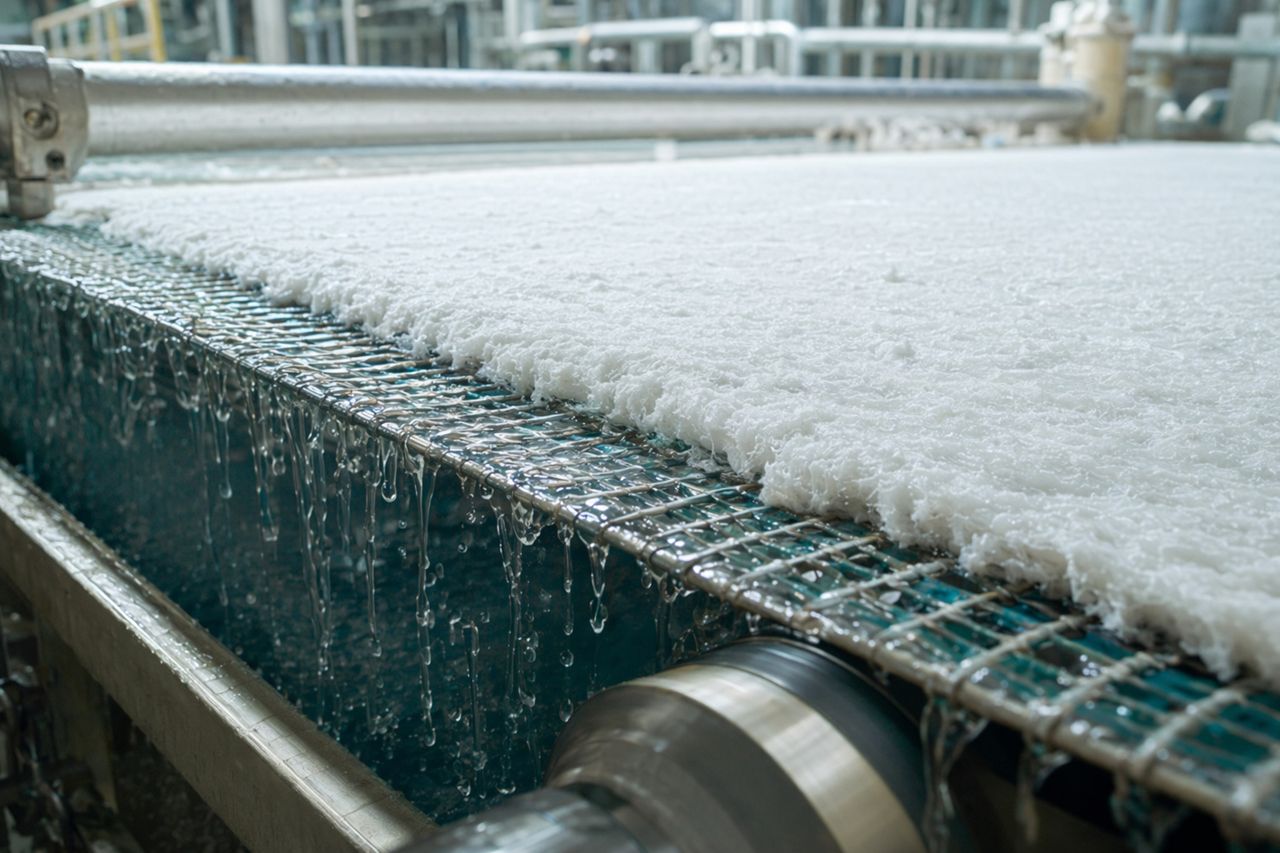
- Better drainage through washers, deckers, and paper machine forming sections
- Lower macro-stickies and tack-related deposition risk
- Reduced surfactant, dispersant, or alkaline chemical pressure where the furnish allows
- More stable yield and ash/fines behavior during furnish swings
- Fewer avoidable cleanouts linked to pitch, adhesive, and ink load
Enzyme families used in recycled fiber systems
Cellulase for fiber surface conditioning
Carefully selected cellulase systems can help loosen ink particles from fiber surfaces and improve drainage behavior. Pulprift positions cellulase where the mill needs ink release and water removal gains without creating unacceptable fines generation or strength loss.
Best-fit use cases:
- ONP and mixed recovered fiber lines
- Deinking loops with drainage bottlenecks
- Furnish with stubborn ink attachment
- Mills seeking chemical reduction without sacrificing sheet properties
Xylanase for hemicellulose modification
Xylanase can support fiber surface opening and contaminant release in certain recycled furnishes, especially where hemicellulose behavior affects drainage, washing, or chemical demand.
Best-fit use cases:
- Furnishes with variable hardwood content
- Washing-limited systems
- Lines targeting smoother deinking chemistry response
- Mills balancing brightness with yield retention
Lipase for pitch, oils, and adhesive-related load
Lipase can help manage lipid-based contaminants, oils, coating residues, and components of adhesive systems that contribute to deposits and unstable runnability.
Best-fit use cases:
- Mixed office waste and coated recovered grades
- Mills with deposit formation around screens, cleaners, felts, or white water loops
- Systems with elevated pitch or oil carryover
- Programs targeting downtime reduction and cleaner circuits
Laccase for color body and recalcitrant contaminant support
Laccase can be considered where mills face difficult chromophores, coating chemistry, or organic color bodies that do not respond cleanly to standard chemistry alone. Pulprift treats laccase as a targeted process tool, not a universal replacement for deinking chemistry.
Best-fit use cases:
- Specialty recovered fiber streams
- Color management programs
- Mills evaluating lower oxidative chemical intensity
- Trial work around difficult print or coating systems
Where Pulprift typically enters your process
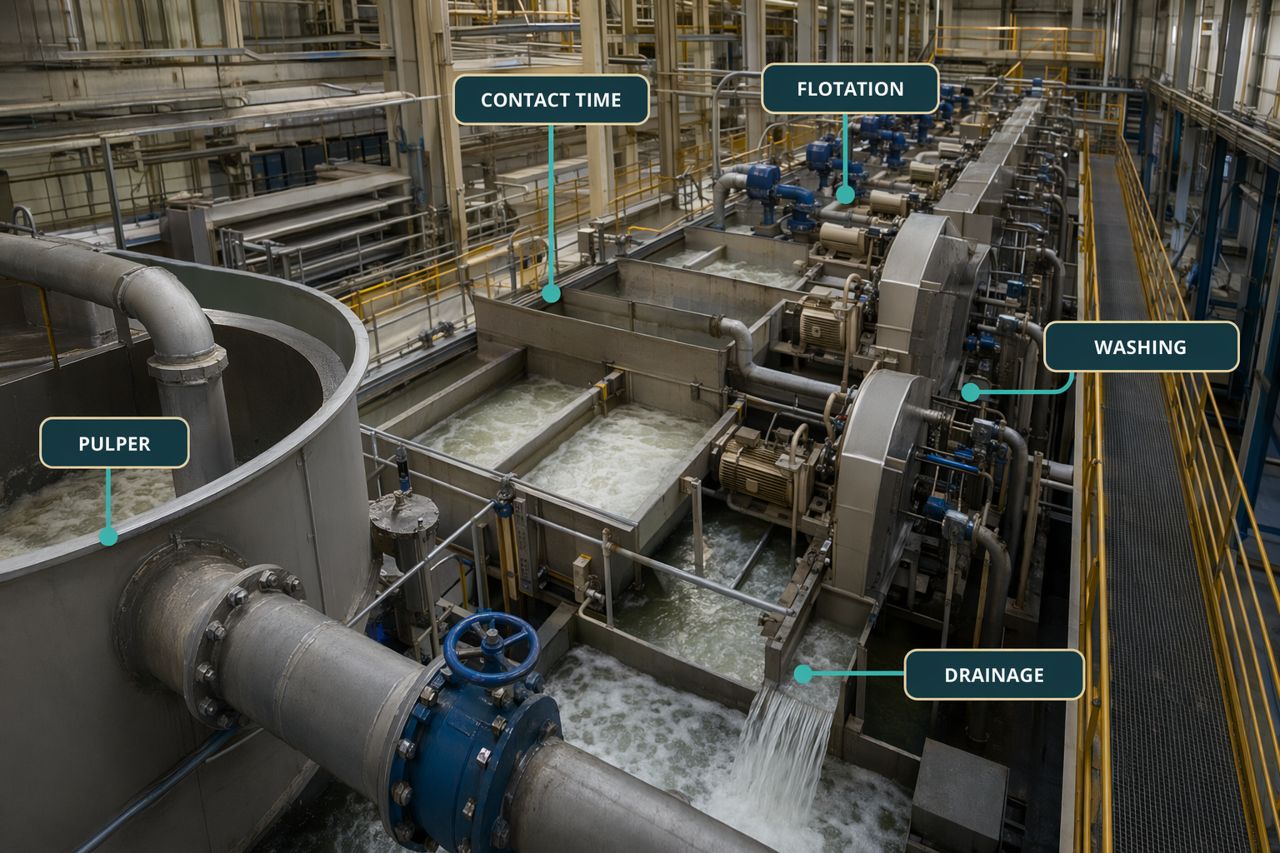
Most enzymatic deinking programs are evaluated in the pulper, dump chest, blend chest, or pre-flotation contact stage. The right point depends on contact time, temperature, pH, shear, chemical addition order, and how quickly ink and contaminants move toward flotation, washing, or screening.
Pulprift helps define the practical application window:
- Furnish type and inbound variability
- Current chemical program and addition sequence
- Pulper consistency and retention profile
- Pre-flotation contact opportunity
- Temperature and pH operating range
- Drainage, brightness, dirt count, stickies, and yield targets
- Process constraints that cannot be changed during production
Trial design for deinking mills
A useful trial should answer an operational question, not just confirm that an enzyme was added.
Pulprift trial plans are built around mill KPIs such as:
- Brightness gain across pulping, flotation, and washing
- Ink speck reduction and dirt count trend
- Flotation foam behavior and reject quality
- Drainage rate and vacuum demand
- Stickies count, deposit tendency, and cleaning frequency
- Fiber loss, ash movement, and yield impact
- Chemical consumption per ton of accepted pulp
- Machine runnability after the deinked pulp enters the furnish blend
We help mills compare baseline, enzyme-assisted, and optimized chemistry conditions so the team can see whether the program earns its place in the system.
What buyers get from Pulprift
Pulprift is built for B2B supply conversations with technical accountability.
You can expect:
- Bulk enzyme supply matched to recycled fiber applications
- Furnish-specific recommendation support
- Practical dosing and addition-point guidance without unnecessary lab language
- Trial planning aligned to your existing mill measurements
- Scale-up support from first evaluation to repeat supply
- Documentation for procurement, technical, and production teams
- Straight answers when an enzyme is not the right tool for a furnish problem
Common operating problems we support
Brightness plateau after flotation
When brightness gain stalls, the issue may be ink detachment, particle size distribution, chemistry sequence, or insufficient contact before flotation. Enzymes can sometimes improve ink release so existing flotation assets work harder without requiring a major process change.
Stickies and deposition pressure
Recovered paper brings pressure-sensitive adhesives, hot melts, coatings, waxes, oils, and fines-bound contaminants. Enzyme selection can support a broader stickies-control plan when paired with screening, cleaning, fixation, and deposit monitoring.
Slow drainage and high vacuum demand
Drainage-limited recycled systems often pay for the problem in energy, speed restriction, sheet formation, and wet-end instability. Targeted enzyme use can improve water release when the bottleneck is linked to fiber surface condition, fines behavior, or contaminant loading.
Chemical cost and effluent load
Where chemistry is being pushed to compensate for poor ink release or contaminant carryover, an enzyme program may allow a more balanced chemical profile. The goal is controlled reduction, not blind substitution.
Built for recovered fiber variability
Pulprift does not treat every deinking line the same. A tissue mill using high-grade recovered fiber has different requirements than a newsprint line, a packaging mill using mixed paper, or a specialty producer handling coated office waste.
That is why every quote request starts with process context:
- Grade produced
- Recovered fiber mix
- Deinking system layout
- Main operating pain points
- Current chemical program
- Target outcomes
- Monthly or annual supply requirement
Request a quote
Tell us what your mill is trying to improve. Pulprift will respond with a practical enzyme supply recommendation, trial path, and bulk quote for your application.