Cellulase for Recycled Pulp Deinking
Enzymesfield supplies cellulase for recovered-fiber deinking systems where the operating target is clear: detach more ink, move water faster, protect usable fiber, and reduce avoidable chemical and mechanical load.
For mills buying an enzyme supplier for paper deinking mills, the question is not whether cellulase can act on fiber. The question is whether it can be applied in the right window, controlled against strength and yield risk, and supported through mill trials that show usable process value.
Enzymesfield is built for that work.
Where cellulase fits in the deinking line
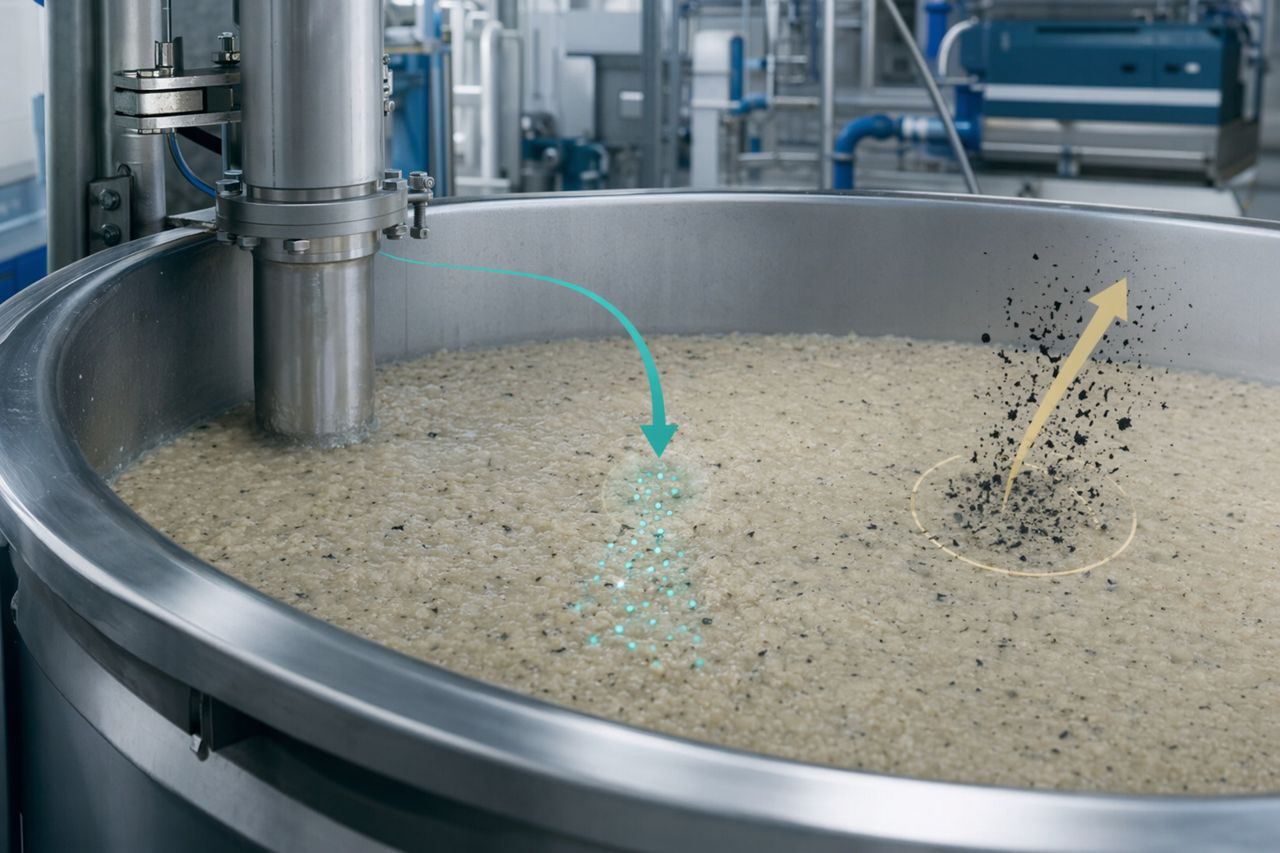
Cellulase is typically used ahead of or within the deinking preparation stage, where controlled fiber-surface modification can improve ink detachment and water release.
Common application points include:
- Pulper discharge or dump chest
- Pre-flotation conditioning chest
- Deinking feed preparation stage
- Recovered-fiber stock before washing or flotation
- OCC, mixed office waste, ONP, magazine, and mixed recovered-paper furnish trials
The correct point depends on furnish, retention time, pH, temperature, surfactant package, ash load, and the mill’s sensitivity to fiber cutting or fines generation.
Enzymesfield helps define that window before scale-up.
Process outcomes mills usually target
A controlled cellulase program can support several deinking goals:
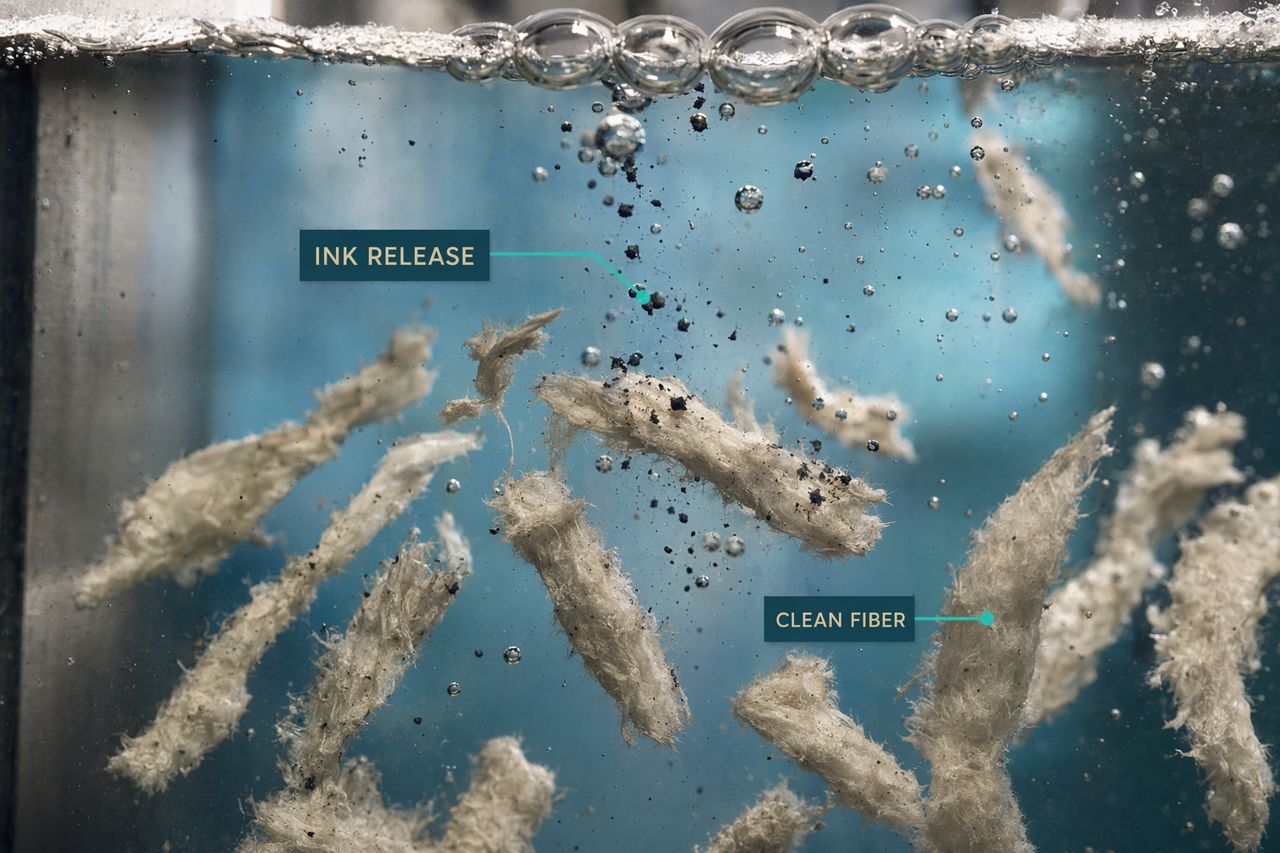
Better ink release
Cellulase can open fiber surfaces and help loosen ink particles from recovered pulp. In the right chemistry package, this can support more efficient flotation or washing and reduce the load on downstream cleaning. Readers who want the broader chemistry can see how enzymatic cellulose hydrolysis is applied in biofuel production.
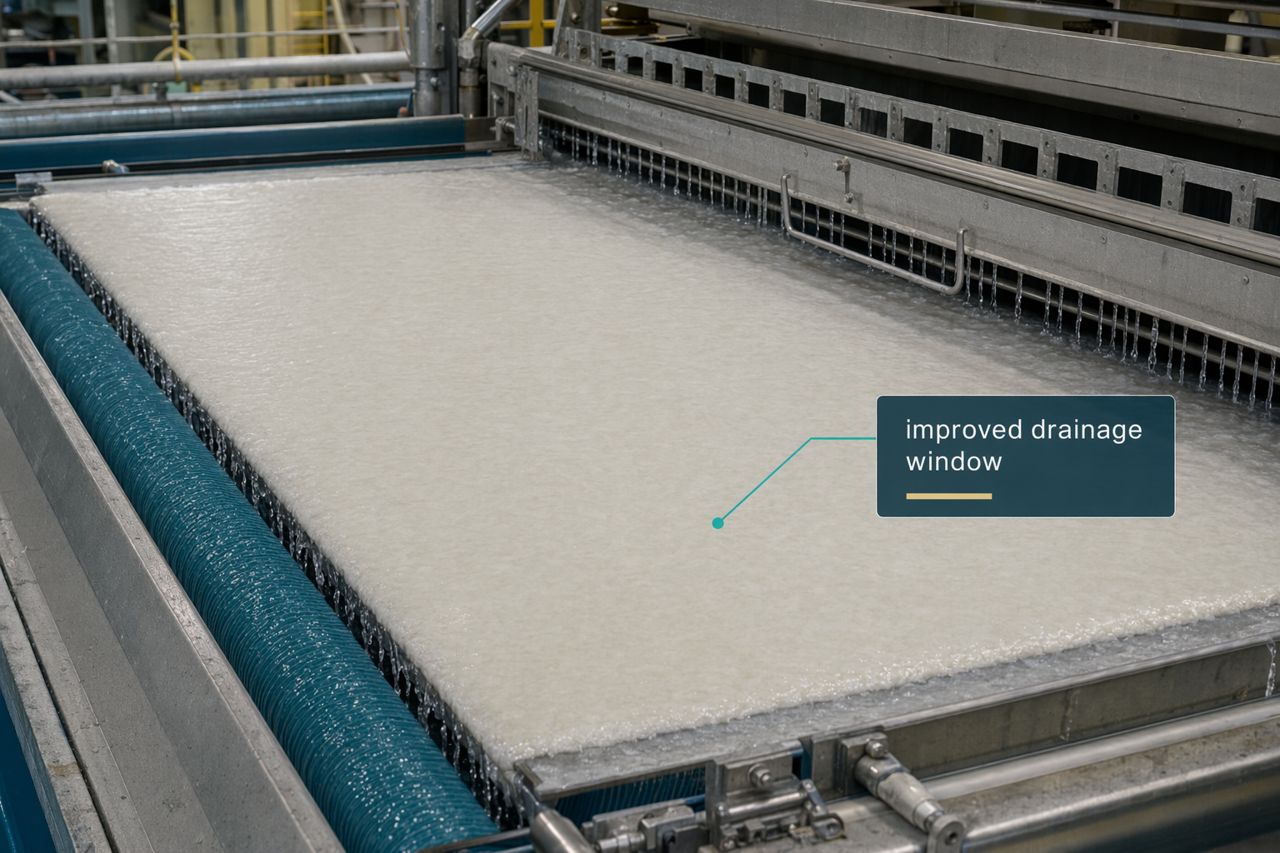
Improved drainage and dewatering
By modifying surface fibrillation and fines behavior, cellulase can help stock release water more predictably. Mills may see value in faster drainage, improved thickening, or less pressure on forming and press sections depending on the full process setup.
Reduced mechanical load
When ink detachment and fiber conditioning improve earlier in the loop, mills may be able to reduce the severity of mechanical treatment. This can help protect fiber length, reduce energy demand, and limit unnecessary fines formation.
Chemical optimization
Cellulase does not replace the deinking chemistry package by default. It gives the mill another lever. In some systems, enzyme-assisted conditioning supports lower caustic, peroxide, dispersant, or collector demand while maintaining brightness and cleanliness targets.
More stable recovered-pulp quality
Recovered furnish is variable. A practical cellulase program is tuned to handle shifts in furnish mix, ink load, stickies pressure, ash, and aging without pushing the system into strength loss or yield penalty.
What Enzymesfield supplies
Enzymesfield supplies cellulase products selected for deinking-relevant performance rather than generic fiber hydrolysis.
Our supply focus includes:
- Cellulase for recovered-pulp deinking and fiber conditioning
- Application guidance for pH, temperature, retention, and addition point
- Trial planning for pulping managers and process engineers
- Compatibility review with surfactants, peroxide systems, dispersants, caustic, and retention programs
- Scale-up support from lab screening to machine confirmation
- Practical documentation for purchasing, technical, and EHS review
No mill needs a vague enzyme recommendation. You need a product, a feed point, a trial plan, and a way to measure whether it earns its place in the process.
Application window and operating control
Cellulase performance depends on the conditions around it. The most important control variables are:
- Furnish type and recycled-paper source
- Stock consistency at the addition point
- Contact time before flotation, washing, or thickening
- Process pH and temperature
- Shear level in pulpers, pumps, screens, and chests
- Chemical compatibility with the deinking package
- Target balance between ink release, drainage, strength, and yield
Over-application can create avoidable risk: excess fines, lower yield, slower strength recovery, or sheet property movement outside specification. Enzymesfield’s role is to help mills find the usable operating band, not simply increase enzyme feed.
Trial design for deinking mills
Enzymesfield supports structured evaluation so your team can make a commercial decision from mill-relevant data.
A typical qualification plan reviews:
- Current furnish mix and deinking line configuration
- Baseline brightness, dirt count, ash, stickies, freeness, drainage, and yield indicators
- Current chemical program and mechanical treatment intensity
- Proposed enzyme addition point and retention window
- Side-by-side control run and enzyme-assisted run
- Impact on flotation reject, accepts quality, thickening, white water, and downstream paper properties
- Economic review against chemical savings, energy impact, yield movement, downtime reduction, and final pulp quality
The goal is not a perfect lab result. The goal is a stable operating change that survives real recovered-fiber variation.
Buyer value for paper recycling mills
Enzymesfield cellulase programs are built around measurable mill value:
- Cleaner fiber entering flotation or washing
- Improved ink detachment under controlled conditions
- Better drainage behavior where fines and fibrillation are limiting throughput
- Reduced reliance on harsh chemical or mechanical treatment when the process allows
- Lower risk of over-treatment through defined application windows
- Support for brightness, cleanliness, yield, and runnability targets
- A supplier conversation grounded in pulp loop realities, not generic enzyme claims
Embedded explainer video
Faceless video module: Cellulase in a recovered-pulp deinking loop.
This one-minute explainer shows recycled-paper slurry moving from pulping into enzyme conditioning, flotation, screening, and sheet formation. The visual sequence is diagrammatic and industrial: no presenters, no avatars, no faces — only fiber, water, ink separation, flow arrows, and process labels.
When to contact Enzymesfield
Contact Enzymesfield if your mill is evaluating cellulase for any of the following conditions:
- Brightness gain has plateaued without heavier chemical use
- Ink specks are carrying through flotation or washing
- Drainage or thickening is limiting throughput
- Mechanical treatment is creating too much fines load
- Stickies and hydrophobic contaminants are affecting stability
- The furnish mix has shifted and the current program is less predictable
- Purchasing needs a qualified enzyme supplier for a deinking-specific trial
Request a quote
Use the form below to request pricing, availability, and technical fit for your deinking line.
Include your furnish type, process pH, temperature range, addition point under consideration, current deinking chemistry, and the performance target you want to improve.