Screening, Cleaning, Dispersing, and Enzymes: Building a Deinking Improvement Stack
For a paper recycling mill, deinking performance is rarely fixed by one lever. Screens remove what can be separated by size and shape. Cleaners remove what responds to density. Dispersers reduce visible dirt and break down deposits that survived earlier stages. Chemistry shifts ink release, flotation response, stickies behavior, fiber wetting, and drainage.
Enzymes fit into that stack when the mill needs a more fiber-focused way to improve release and runnability without simply adding more caustic, surfactant, peroxide, or mechanical load.
Enzymesfield works as an enzyme supplier for paper deinking mills where the objective is operational: cleaner recovered fiber, better machine stability, fewer deposit events, and a deinking loop that responds more predictably to changing recovered paper quality.
Wholesale and bulk supply. Request a quote. For paper and board manufacturers, paper-chemical resellers and distributors, and biotech formulators. Send the product or the deinking problem to solve, the quantity, and the delivery destination; pricing, pack format and lead time are quoted per order. Request a quote
The improvement stack starts with the furnish, not the product
Mixed office waste, sorted office paper, old newspapers, magazines, coated grades, packaging contamination, thermal papers, labels, adhesives, and wet-strength material all behave differently in the pulper and loop.
Before changing chemistry, a mill should define what problem is actually limiting value:
- Low brightness after flotation
- High residual ink speck count
- Foam instability or poor ink carryover
- Stickies deposition on screens, wires, felts, dryers, or rolls
- Poor drainage through washers or paper machine forming section
- Excess reject loss from screening or cleaning
- High disperser load with limited visible improvement
- Variable response to peroxide, silicate, caustic, collector, or surfactant
- Downtime from plugging, deposition, or boil-outs
Enzymes are not a substitute for poor contaminant removal. They perform best when matched to the furnish, dose point, temperature window, pH window, retention time, and downstream separation system.
Screening: protect the loop from oversized contaminants
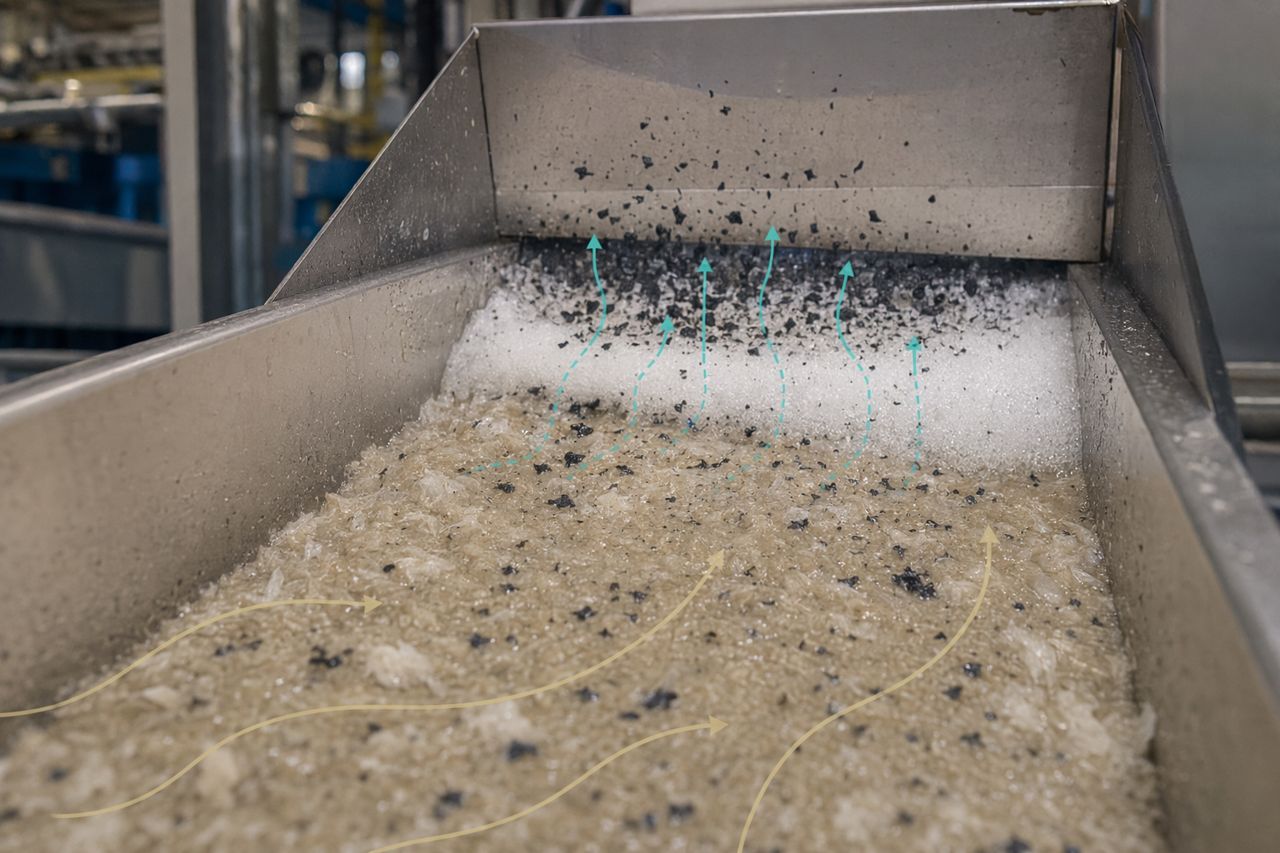
Pressure screens, coarse screens, fine screens, and slotted screening stages are the first defense against plastic, stickies agglomerates, shives, tape, labels, and other oversized contaminants.
A good screen room does more than remove trash. It protects the flotation cells, cleaners, disperser, washer, approach flow, and paper machine from unstable loading.
Where enzymes can support screening
Enzymes can improve the condition of the fiber-water-contaminant mix before screening when the target is better ink detachment, improved fiber wetting, and reduced contaminant attachment to fiber surfaces.
In practical terms, a well-selected enzyme program may support:
- Lower tendency for hydrophobic material to remain locked onto fiber
- Cleaner passage of usable fiber through the screen system
- Less need to force separation through higher mechanical intensity
- More stable downstream flotation and washing response
The key is not to over-treat. Excessive fiber surface modification can work against yield, strength, or fines control. The right program is controlled, narrow, and aligned to mill targets.
Cleaning: remove what density can separate
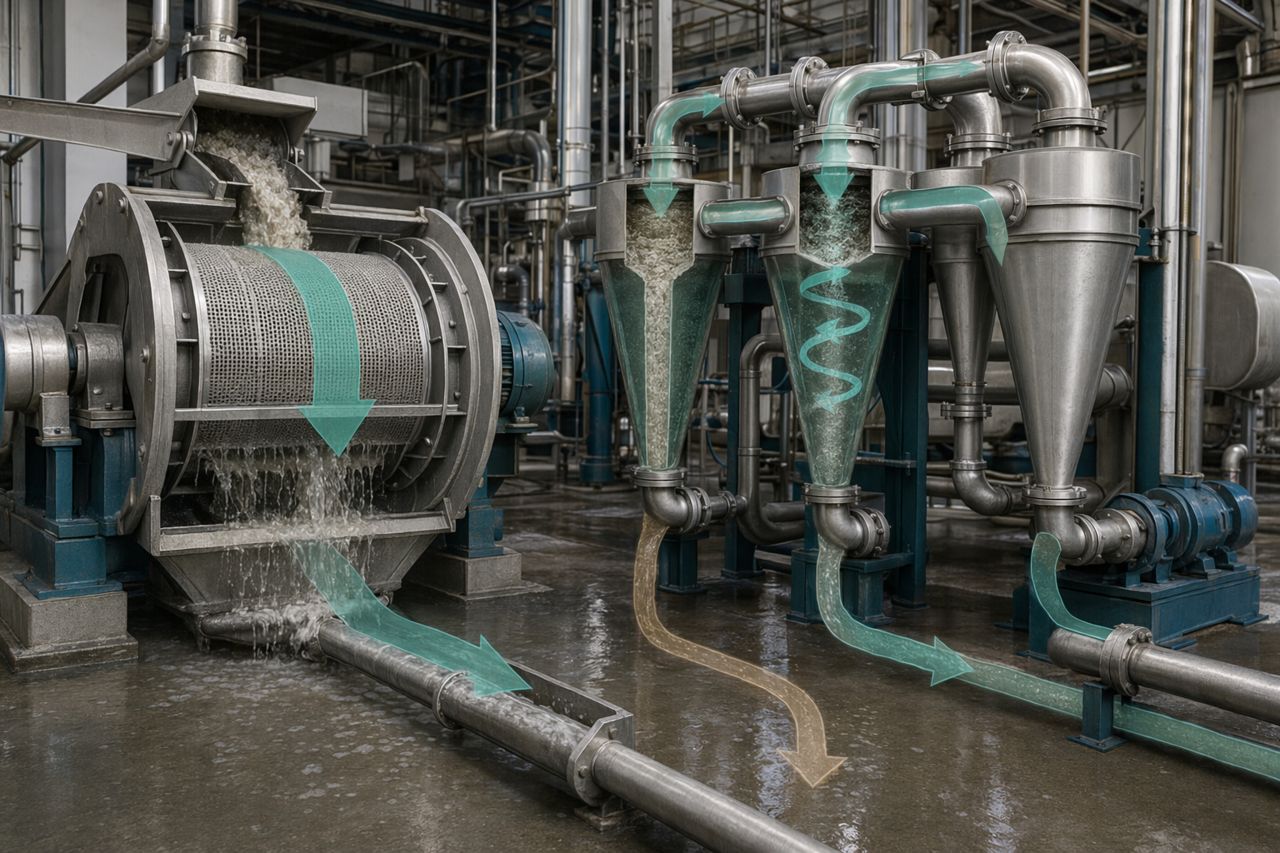
Centrifugal cleaners are effective when contaminants have a meaningful density difference from fiber. Sand, glass, grit, staples, dense inks, and some coating fragments can be removed here.
Cleaner performance depends on feed consistency, pressure stability, reject rate, contaminant loading, and upstream pulping quality. When the furnish swings, the cleaner bank often sees the change before the paper machine does.
Enzymes do not replace cleaners
Enzymes cannot turn a density problem into a chemical shortcut. They should be viewed as a way to condition the fiber and ink interface so the rest of the separation system has a cleaner job to do.
When enzymes help release ink and reduce fiber-bound contaminants upstream, cleaners and flotation cells can work against a more liberated contaminant load instead of a smeared, fiber-attached load.
Dispersing: reduce visible dirt, but do not rely on it as the only fix
Dispersing can be valuable, especially when visible specks must be reduced and residual ink or adhesive particles have passed earlier separation steps. But dispersing also consumes energy, adds thermal and mechanical stress, and can reduce particle size in ways that make later removal harder if the system is not balanced.
A disperser should not become the mill’s default solution for every deinking weakness.
The risk of over-dispersing
If ink or stickies are broken down after the best removal windows have passed, the loop may gain temporary visual improvement while pushing fine hydrophobic material forward into washers, whitewater, or the paper machine.
That can show up as:
- Higher dirt load returning in whitewater
- More deposit risk on machine clothing and rolls
- More unstable foam behavior
- Higher demand for retention, drainage, or deposit-control chemistry
- Quality drift after a furnish change
Enzyme treatment upstream can support better release before major separation stages, helping the mill remove more of the problem earlier instead of simply making it smaller later.
Enzymes: a conditioning layer in the deinking stack
In a deinking system, enzyme selection is based on the material that needs to be modified. Enzymesfield programs may be built around cellulase, hemicellulase, lipase, esterase, amylase, pectinase, or blended activity profiles depending on furnish and target outcome.
The buyer does not need a catalog of enzyme names. The buyer needs a program that fits the mill.
Common enzyme objectives in recovered fiber deinking
A deinking enzyme program can be designed to support one or more of the following outcomes:
- Improve ink detachment from recovered fibers
- Support brightness gain through better flotation or washing response
- Reduce residual ink and dirt visibility when paired with proper separation
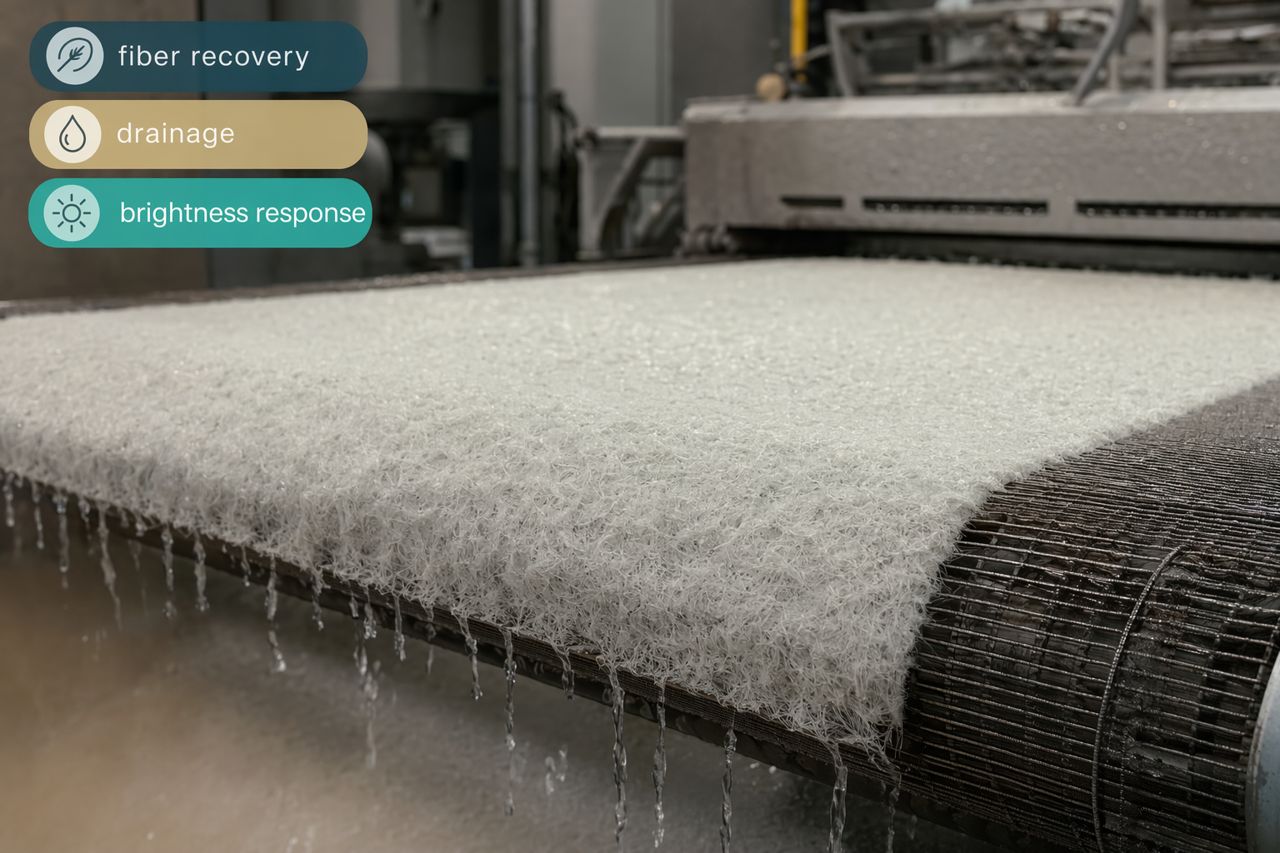
- Improve drainage by modifying fiber surface behavior and dissolved load
- Reduce stickies tendency by targeting adhesive-related materials
- Lower reliance on harsh chemical conditions where process windows allow
- Improve consistency across variable recovered paper furnish
- Reduce downtime linked to deposition and plugging events
- Protect usable fiber yield by avoiding aggressive mechanical overwork
Enzymesfield does not position enzymes as a universal fix. We position them as a controlled process tool inside a mill-specific deinking improvement stack.
Best dose points for enzyme integration
The right location depends on the mill layout, furnish, and target. Typical evaluation points include:
Pulper or pulper discharge
Useful when the objective is early ink release, fiber wetting, and contaminant liberation. This location gives enzymes access before major screening and flotation stages, but shear, temperature, and pH must be compatible.
Dump chest or reaction chest
Often useful when the mill needs a more controlled retention window. This can help separate enzyme contact time from pulper variability.
Before flotation
Applicable when ink release is the main target and the flotation system has enough capacity to remove liberated particles. Surfactant balance and foam behavior must be reviewed.
Before washing or thickening
Relevant when drainage, dissolved load, fines behavior, or wash response are the main concerns. This requires close review of filtrate quality and downstream whitewater impact.
Before dispersing
Considered when the mill wants to reduce the burden on dispersing or improve the nature of the material entering the disperser. The aim is to remove or weaken contaminants before they are mechanically reduced.
Compatibility matters: pH, temperature, chemicals, and retention
A paper recycling mill does not run in a lab. Enzymes must tolerate real process conditions.
Enzymesfield reviews the operating window around:
- Process pH at the proposed dose point
- Temperature stability during contact time
- Retention time and mixing quality
- Peroxide, caustic, silicate, chelants, surfactants, and collectors
- Biocide and preservative exposure
- Dissolved and colloidal substances load
- Water loop closure and conductivity
- Carryover risk into downstream wet-end chemistry
The objective is to avoid adding a sensitive product into a location where it cannot perform or where it creates secondary effects.
What to measure during a mill trial
A useful enzyme trial should be judged by mill outcomes, not by isolated lab claims.
Recommended trial tracking includes:
- Incoming furnish description and contamination profile
- Pulp brightness before and after key stages
- Residual ink or dirt trend by mill method
- Flotation reject quality and foam stability
- Stickies count or deposit observations
- Screen and cleaner reject trend
- Drainage and washer performance
- Thickener, saveall, and filtrate behavior
- Paper machine drainage and break profile
- Chemical consumption changes
- Disperser load, steam demand, or visible dirt response
- Downtime, boil-out frequency, and cleaning intervals
- Finished sheet quality and customer limits
The best trials compare stable baseline operation, controlled enzyme introduction, and a return-to-baseline or confirmation period. Furnish changes should be logged clearly, because recovered paper variability can hide or exaggerate the effect of any program.
How the stack works together
A strong deinking improvement stack does not ask one stage to do every job.
- Pulping opens the furnish and begins ink release.
- Enzymes condition the fiber-contaminant interface within the right window.
- Screening removes contaminants by size and shape.
- Cleaning removes contaminants by density.
- Flotation removes hydrophobic ink and particles when they are properly liberated and collected.
- Washing and thickening remove fines, dissolved load, and dispersed material as the system allows.
- Dispersing reduces visible defects that remain, ideally after removal opportunities have already been used.
- Wet-end control stabilizes retention, drainage, deposits, and sheet formation.
When those stages are balanced, mills can often reduce firefighting: fewer chemical swings, fewer emergency cleanups, more stable brightness response, and better runnability.
When Enzymesfield is a fit
Enzymesfield is a fit when a paper recycling mill wants enzyme support tied to operating targets rather than a generic product recommendation.
Typical project triggers include:
- Brightness has plateaued despite higher chemical input
- Stickies events are increasing with label or packaging contamination
- Drainage is limiting washer or paper machine throughput
- Disperser energy is rising without proportional dirt reduction
- Flotation response changes sharply by recovered paper source
- The mill wants to reduce caustic or surfactant pressure without sacrificing quality
- Deposits are creating downtime and cleaning cost
- Yield loss is increasing through reject streams
Request a quote for a mill-specific deinking enzyme program
If you are evaluating an enzyme layer for screening, cleaning, dispersing, or flotation improvement, Enzymesfield can review your furnish, process window, and operating targets.
Use the on-site request form and include:
- Product: the enzyme you want, or the deinking problem to solve
- Quantity: trial volume or expected monthly usage
- Destination: the country and site the order ships to
- Recovered paper furnish mix
- Main quality issue or downtime driver
- Current dose point candidates
- pH and temperature at those points
- Existing deinking chemistry
- Screening, cleaning, flotation, washing, and dispersing layout
- Trial goals for brightness, stickies, drainage, chemical reduction, or runnability
Request a quote using the on-site form
Enzymesfield will respond with a practical recommendation for fit, trial structure, and the enzyme approach most likely to support your deinking stack.