Bulk Enzyme for Recycled Paper Mill Trials
Enzymesfield supplies bulk enzyme inputs for recycled paper mills preparing deinking, stickies-control, drainage, or pulp-cleanup trials. We work with pulping managers, process engineers, and mill technical teams that need a practical enzyme program—not a lab-only concept—and with the distributors and resellers who supply paper chemicals to those mills.
If your mill is running recovered fiber and wants a controlled trial around brightness gain, ink detachment, furnish cleanliness, drainage, or chemical reduction, Enzymesfield supports the application window, product selection and bulk supply plan, from trial volume to repeat wholesale orders.
Wholesale and bulk supply. Request a quote. For paper and board manufacturers, paper-chemical resellers and distributors, and biotech formulators. Send the product or the job on the line, the quantity, and the delivery destination; pricing, pack format and lead time are quoted per order. Request a quote
Enzyme Inputs Built Around Recycled Fiber Conditions
Recovered fiber systems are variable. Furnish quality changes by bale source, print type, adhesive load, ash content, fines level, and incoming contamination. A useful enzyme program has to fit that operating reality.
Enzymesfield enzyme solutions are selected for mill-floor performance targets such as:
- Improved ink release before flotation or washing
- Better separation of hydrophobic contaminants from usable fiber
- Stickies reduction and cleaner pulp handling
- Faster drainage and improved water removal behavior
- Reduced dependence on harsh chemical packages where trials support it
- Yield-conscious fiber treatment that avoids unnecessary fiber damage
- Cleaner system operation through pulpers, chests, screens, cleaners, and flotation cells
We focus on bulk supply for practical mill trials, not one-off bench samples that cannot be translated into production use.
Where Enzymesfield Fits in the Deinking Line
Enzymesfield can help define the best enzyme addition point based on your process layout and trial objective.
Common application windows include:
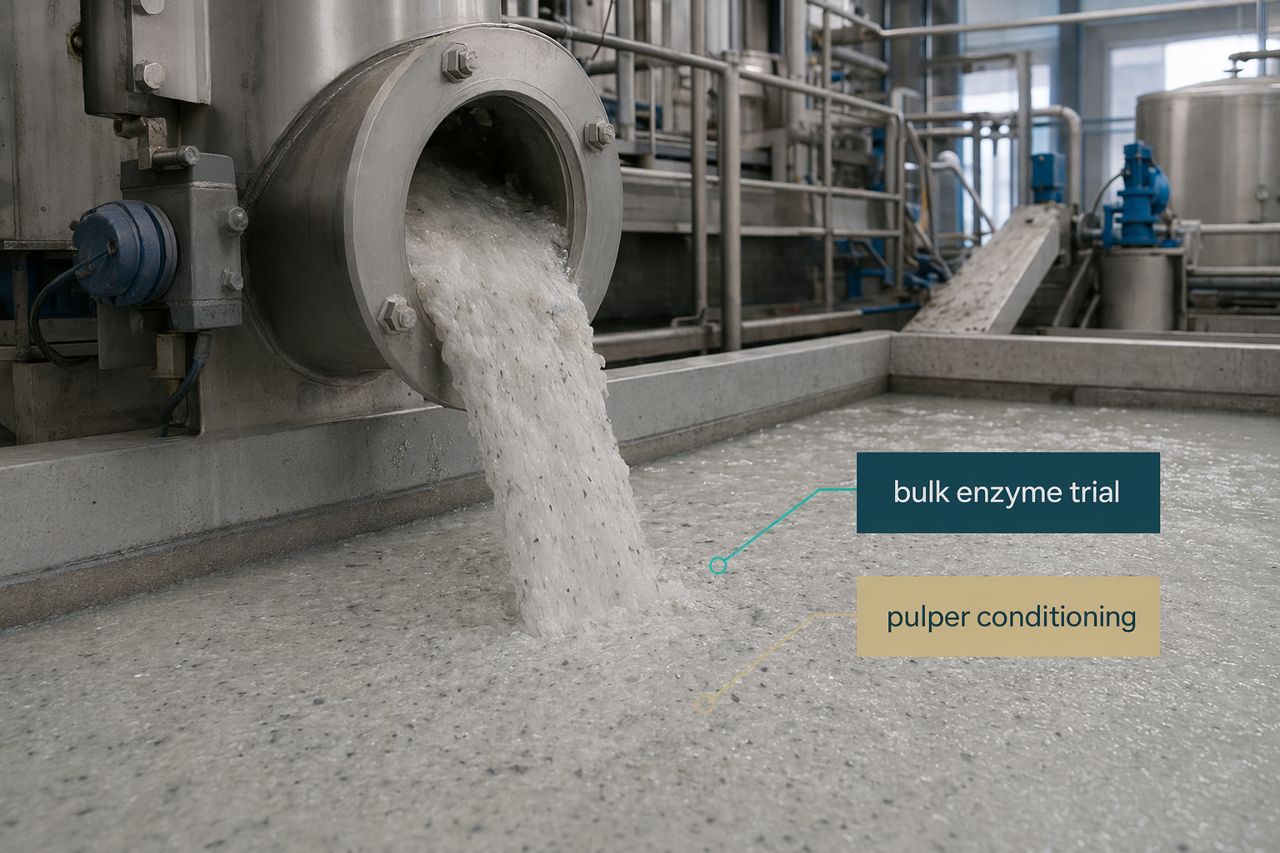
Pulper Addition
Useful when the target is early ink detachment, adhesive softening, or furnish conditioning during fiber slushing. This approach can simplify implementation because enzyme contact begins at the front of the line.
Dump Chest or Post-Pulper Conditioning
Often used when the mill wants controlled residence time before screening, cleaning, or flotation. This window can be useful for balancing contact time with process stability.
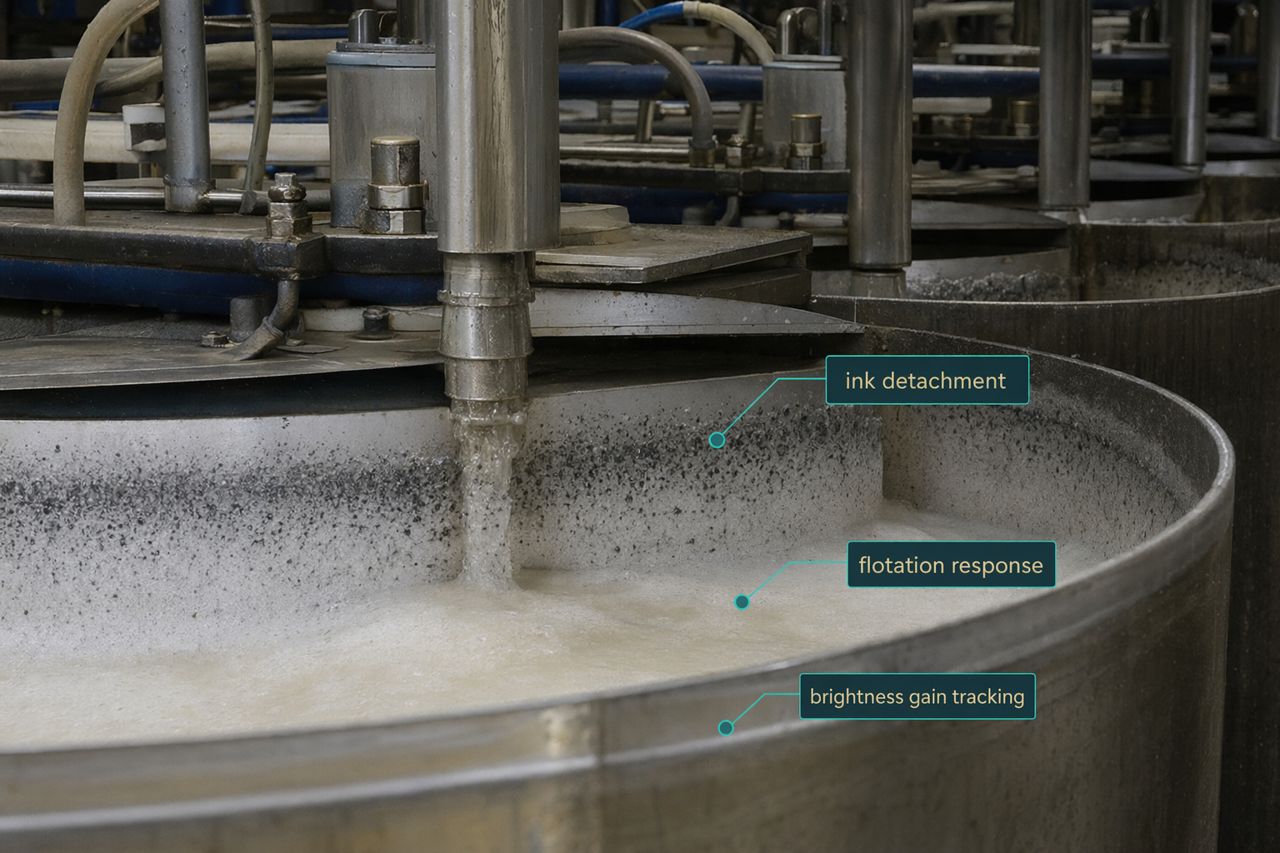
Flotation Feed Conditioning
Selected when the trial is focused on ink lift, foam reject quality, brightness response, and reduced carryover of ink specks into accepted pulp.
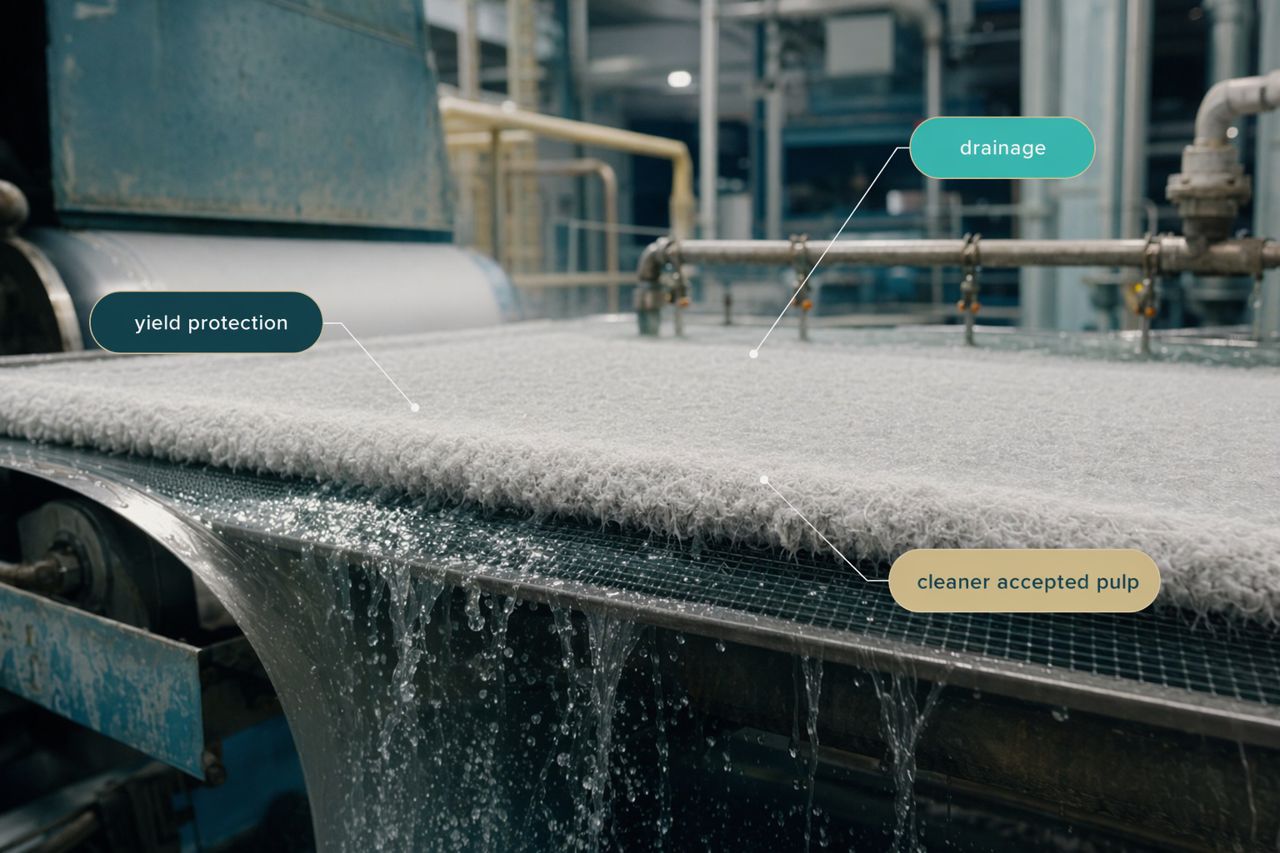
Pulp Cleanup Before Sheet Formation
Applicable when the main target is drainage, cleaner water release, stickies management, or improved machine runnability downstream.
Trial Objectives We Help Mills Measure
A Enzymesfield trial should be tied to operational indicators that your mill already tracks. Typical evaluation points include:
- Incoming furnish quality and print load
- Pulper energy response and slushing behavior
- Ink speck count before and after flotation or washing
- Brightness movement across the deinking loop
- Flotation reject character and ash/fiber loss trend
- Stickies deposits, screen loading, and cleaner reject behavior
- Drainage rate and white water clarity
- Wet-end stability and sheet cleanliness
- Chemical package changes during controlled comparison runs
- Downtime or washup frequency related to deposits
The goal is not just to show enzyme activity. The goal is to determine whether the enzyme program improves the mill’s economics and operating control.
How recycled-fibre enzymes are sold and dosed for packaging-paper mills
Enzymes for recycled pulp are usually sold not as single named enzymes but as purpose-built compound preparations, each tied to one job on the line: a deinking compound for pretreating pulp before deinking, and a drainage compound for secondary-fibre pulp. For a buyer, the first question is the job, not the enzyme name.
Deinking pretreatment compound
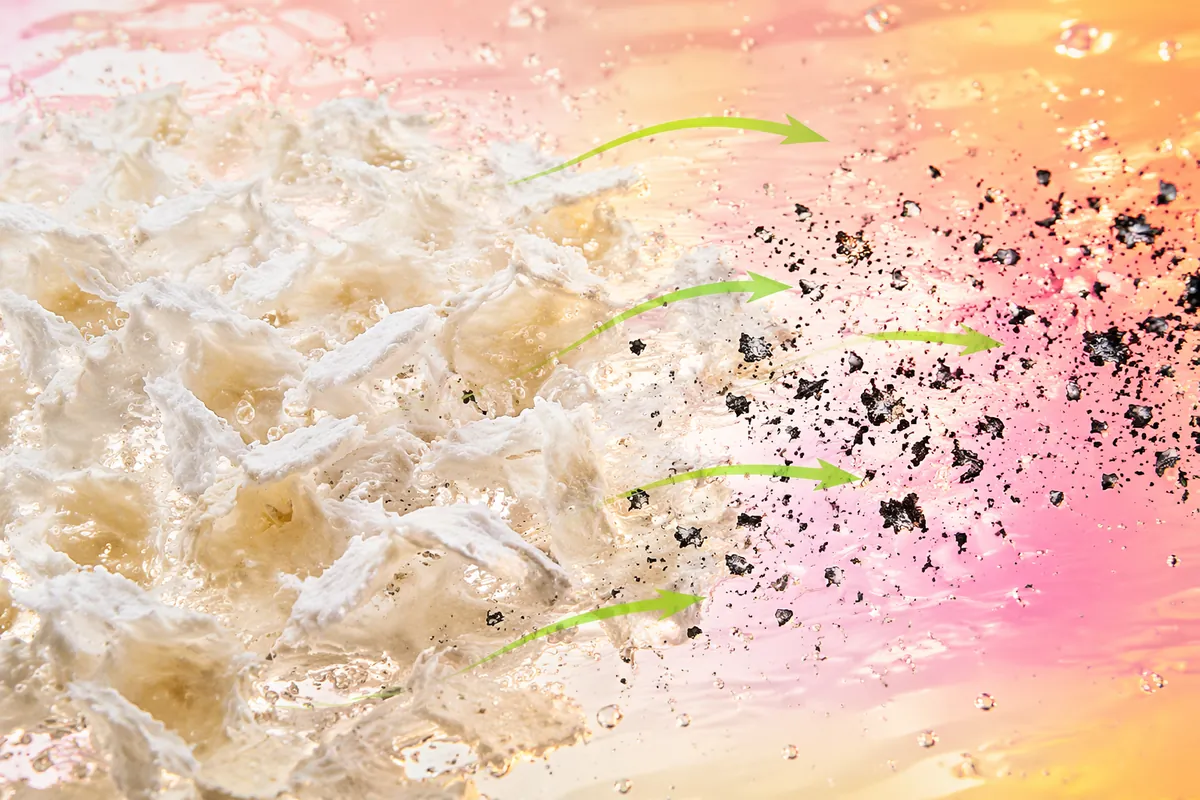
The deinking compound is several enzymes working together on the fines at the fibre surface, on the binders in inks and stickies, and on the ink and stickie particles themselves, so the bond between fibre and contaminant weakens and the ink peels away more easily. Its purpose is to raise ink-stripping efficiency and to stop detached ink from re-agglomerating and contaminating the fibre a second time. It goes into the high-consistency pulper, either in batches or continuously through a metering pump, with a reaction time of 0.5 to 2 hours. The typical working window is 35 to 65 °C, best at 45 to 60 °C, at pH 5.0 to 9.0, and the final process has to be tuned to each mill's actual conditions.
Drainage compound for secondary fibre
The drainage compound is made specifically for secondary-fibre pulp: waste-paper stock is pretreated before the paper machine to raise its drainage speed. It is aimed above all at high-speed machines making packaging paper from waste-paper pulp, such as corrugating medium and boxboard. It is added either to the stock tower after pulping or to the storage chest just before stock goes to the machine, and its typical window is 35 to 65 °C at pH 6.0 to 10.0. Faster drainage on a packaging machine usually pays back as speed or as lower dryer steam demand.
Pack format is quoted per order; name the pack size you prefer in your inquiry.
| Job on the line | Where it is added | Typical working window |
|---|---|---|
| Deinking pretreatment | High-consistency pulper, batch or metering pump, 0.5 to 2 h reaction | 35 to 65 °C (best 45 to 60 °C), pH 5.0 to 9.0 |
| Drainage of secondary-fibre pulp | Stock tower after pulping, or machine storage chest | 35 to 65 °C, pH 6.0 to 10.0 |
Name the job first (deinking pretreatment, drainage, or both) and check that temperature and pH at your addition point sit inside its window.
Bulk Supply for Production-Relevant Trials
Enzymesfield supports mills that need enough material to run a meaningful evaluation across real furnish variation. We can discuss bulk pack formats, delivery timing, storage expectations, and trial duration based on your operating schedule.
Our process is straightforward:
- Review the furnish and line layout — OCC, ONP, mixed office waste, magazine grades, coated material, or blended recovered fiber streams.
- Define the trial target — brightness, ink removal, stickies, drainage, chemical reduction, yield protection, or runnability.
- Select the application window — pulper, chest, flotation feed, or pulp cleanup stage.
- Set the comparison plan — baseline run, enzyme run, and return-to-baseline check where practical.
- Supply bulk enzyme for the trial — aligned with your handling, storage, and dosing approach.
- Review mill data — focusing on process outcomes and operational value.
What Makes Enzymesfield Practical for Paper Recycling Mills
Enzymesfield is built for industrial recovered-fiber environments. We understand that enzyme selection has to account for furnish variability, process chemistry, water loops, retention time, shear, stock consistency, and downstream paper machine constraints.
You get:
- A technical supply conversation based on your process, not generic catalog language
- Enzyme options aligned to deinking and pulp-cleanup objectives
- Bulk quantities suitable for production-relevant trials
- Support for trial planning and performance review
- Clear discussion of compatibility with existing surfactants, dispersants, caustic, peroxide systems, and flotation chemistry
- A practical path from trial material to repeat bulk supply if results support adoption
Potential Mill Benefits
When applied in the right window and validated against a controlled baseline, enzyme treatment may support:
- Higher recovered fiber brightness
- Lower visible ink carryover
- Improved flotation response
- Better stickies control
- Reduced deposition risk
- Easier drainage and improved water release
- Lower chemical pressure in parts of the deinking program
- Improved accepted pulp cleanliness
- More stable operation across variable recovered furnish
Actual results depend on furnish mix, line design, chemistry, contact time, and operating conditions. Enzymesfield helps structure the trial so the mill can make that decision from its own data.
Request a Quote for a Bulk Mill Trial
If your mill is preparing a deinking or pulp-cleanup trial, send us the operating context and target outcome. The more specific the process information, the better we can recommend the right bulk enzyme supply path.
What to put in your inquiry:
- Product: deinking, drainage or stickies-control enzyme, or the problem to solve
- Quantity: trial volume, estimated run length and expected repeat usage
- Destination: the country and site the order ships to, for freight planning
- Recovered fiber grade or furnish blend
- Deinking system type
- Current pain point: brightness, ink specks, stickies, drainage, deposits, or chemical load
- Intended enzyme addition point
- Bulk packaging preference
Ready to Evaluate Enzymesfield in Your Recycled Paper Line?
Use the on-page form to request a quote for bulk enzyme supply. We will respond with a practical trial discussion focused on your mill conditions, not a generic sales script.