Enzyme for Pulp Deinking: Furnish-Based Selection Guide
Pulprift supplies enzyme solutions for paper recycling mills that need cleaner deinking, better drainage, lower stickies pressure, and more stable recycled pulp quality.
The right enzyme for pulp deinking depends on the furnish. ONP/OMG, sorted office paper, coated book stock, mixed recovered fiber, and broke-heavy streams do not respond the same way. Ink anchoring, coating starch, fines load, ash level, adhesive contamination, pulper chemistry, and flotation behavior all change the enzyme choice.
If you are searching for an enzyme supplier for paper deinking mills, Pulprift helps narrow the selection by process outcome, not by generic product labels.
Where Enzymes Fit in a Deinking Mill
Enzymes are typically evaluated where they can condition fiber and contaminants before separation:
- Pulper or post-pulper chest
- Dump chest or blend chest
- Pre-flotation conditioning stage
- Washer or thickener feed, where drainage and fines behavior matter
- Stickies-control programs ahead of screens, cleaners, dispersers, and paper machine approach systems
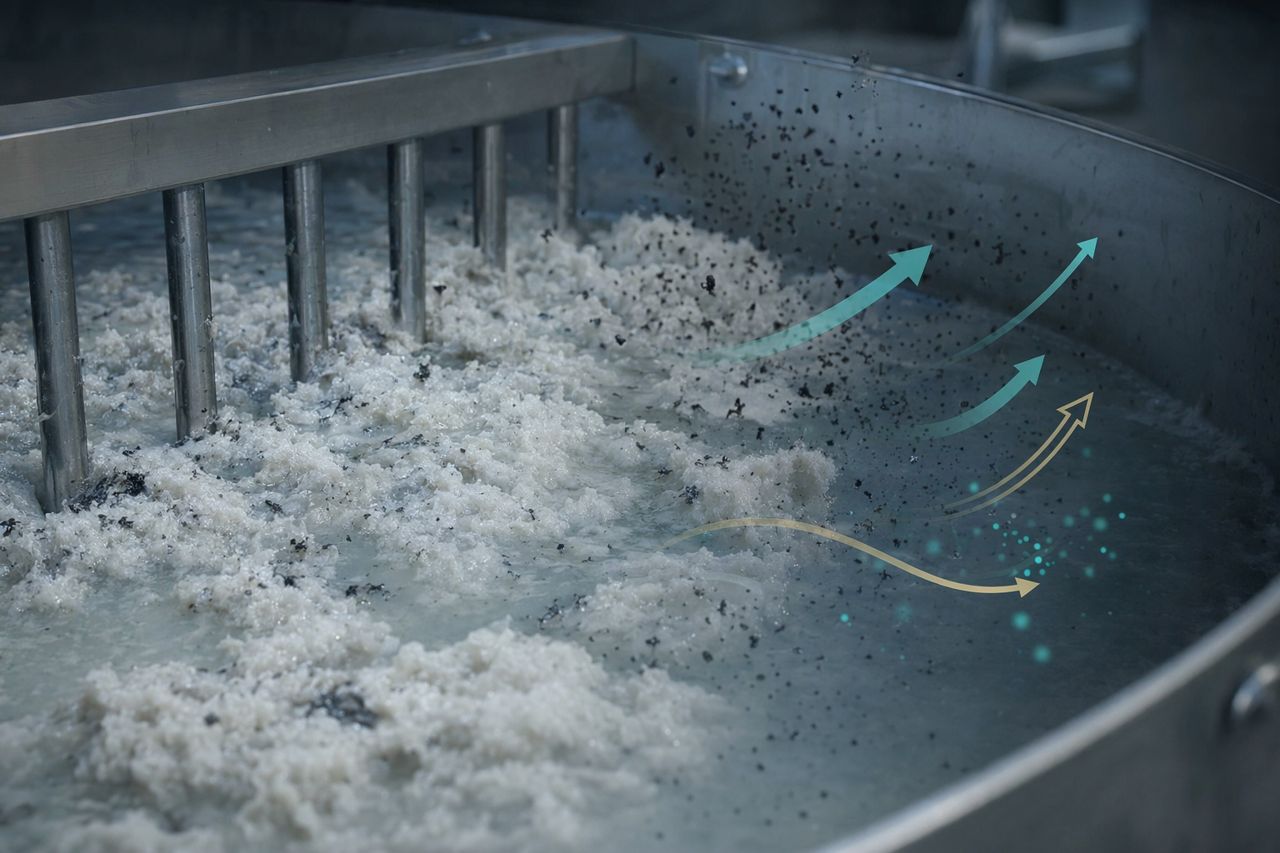
The goal is not simply to add biology into the system. The goal is to change how ink, coating binders, fines, starch, extractives, and adhesive fragments behave under existing mill conditions.
Furnish-Based Selection Matrix
ONP and OMG Blends
Old newspapers and old magazines often need support for ink detachment, flotation response, and drainage without over-cutting the fiber surface.
Pulprift typically evaluates:
- Cellulase-rich programs for controlled surface modification and ink release
- Hemicellulase support where drainage, fines release, and fiber flexibility are limiting
- Balanced blends when brightness gain must be achieved without yield loss or strength penalty
Operational targets may include:
- Higher brightness after flotation and washing
- Lower residual ink visibility
- Improved drainage through the wet end
- Reduced dependence on harsh alkaline chemistry after validation
- More stable flotation foam behavior
Sorted Office Paper and Laser-Printed Furnish
Office waste often carries toner, starch, fillers, adhesives, and variable chemical history. It may need different treatment than mechanical furnish.
Pulprift typically evaluates:
- Cellulase and hemicellulase for fiber surface conditioning and ink release
- Amylase where starch-bound coating or surface sizing interferes with separation
- Lipase or esterase support when adhesive and hydrophobic contaminants increase deposit risk
Operational targets may include:
- Better detachment of laser and copier ink fragments
- Cleaner filtrate and lower dirt count
- Improved consistency of deinked pulp brightness
- Lower stickies load before screening and dispersion
- Smoother downstream runnability
Coated Book, Magazine, and High-Ash Furnish
Coated recovered paper introduces mineral load, latex, starch, binders, and surfactant interactions. Enzyme selection must consider ash behavior and flotation selectivity.
Pulprift typically evaluates:
- Amylase for starch-bearing coating systems
- Hemicellulase for drainage and fiber-fines interaction
- Lipase or esterase where hydrophobic binders and tacky contaminants affect deposits
Operational targets may include:
- More predictable ash release and removal
- Cleaner flotation separation
- Less chemical load needed to keep contaminants dispersed
- Improved thickening and water removal
- Reduced downtime from deposits after program validation
Mixed Recovered Fiber
Mixed furnish is usually the most unstable deinking challenge. The incoming bale mix can shift daily, and the mill may be managing ink, starch, adhesives, wet-strength material, fines, and coating load at the same time.
Pulprift typically evaluates a staged enzyme approach rather than a single-function product:
- Fiber-surface conditioning for ink release
- Starch hydrolysis support where coated material is high
- Lipase or esterase contribution for stickies and hydrophobic contaminants
- Drainage-focused support where fines and dissolved load increase water handling pressure
Operational targets may include:
- More stable brightness across changing furnish
- Reduced stickies excursions
- Lower rejected fiber losses
- Better drainage and less bottlenecking around washers or thickeners
- Fewer process swings after furnish changes
Matching Enzyme Class to Mill Problem
If the problem is poor ink detachment
Start by looking at furnish type, pulper chemistry, surfactant system, flotation response, and whether ink is bonded to fiber, coating, or toner fragments.
Possible enzyme direction:
- Cellulase or hemicellulase for controlled fiber surface conditioning
- Amylase if starch-bound coating is part of the ink release problem
- Combination programs when ink detachment and drainage are both limiting
If the problem is stickies and deposits
Stickies problems are rarely solved by one action. Screens, cleaners, dispersers, fixation chemistry, talc, polymers, and housekeeping all matter. Enzymes can support the program by changing contaminant behavior before it becomes a runnability issue.
Possible enzyme direction:
- Lipase for ester-containing hydrophobic contaminants and oily residues
- Esterase support for adhesive and tack-related control programs
- Blended programs when stickies, coating, and ink detachment occur together
If the problem is slow drainage
Drainage limits can come from fines, swelling, dissolved load, coating materials, poor fiber development, and excessive chemical carryover.
Possible enzyme direction:
- Hemicellulase-forward programs for fines and water release behavior
- Controlled cellulase contribution where surface conditioning supports dewatering
- Amylase support where starch load is affecting water handling
If the problem is chemical load
Mills often want to reduce caustic, peroxide, silicate, surfactant, dispersant, or defoamer pressure. Pulprift approaches this through mill trials, not assumptions.
Possible enzyme direction:
- Select an enzyme route that delivers measurable deinking or drainage contribution first
- Hold pulp quality and runnability stable
- Then trial chemical reduction stepwise under mill control
Application Windows Pulprift Reviews
Before recommending an enzyme for pulp deinking, Pulprift reviews the application window around your actual process.
Key inputs include:
- Furnish mix by grade and seasonal variation
- Pulper temperature profile
- System pH around the proposed addition point
- Retention time before flotation, washing, screening, or thickening
- Consistency and mixing conditions
- Chemical program, including surfactants, alkali, peroxide, dispersants, defoamers, and deposit-control chemistry
- Water loop closure and dissolved load
- Current brightness, dirt, ash, drainage, yield, and runnability constraints
This avoids overfitting the enzyme to a lab condition that cannot survive the mill floor.
What a Practical Mill Trial Should Measure
Pulprift supports trial planning around endpoints that matter to production, quality, and cost.
Recommended trial observations include:
- Brightness movement after flotation and washing
- Residual ink or dirt count trend
- Stickies count and deposit inspection points
- Drainage and thickener behavior
- Reject rate and yield trend
- Ash and fines movement
- Filtrate clarity and foam behavior
- Paper machine runnability indicators
- Chemical consumption changes after stable performance is confirmed
The best enzyme program is one the mill can control, repeat, and justify against recovered fiber variability.
Why Pulprift
Pulprift is built for recycled fiber operations. We speak in furnish, contaminants, separation steps, and downtime risk.
What you can expect:
- Enzyme selection by furnish and operating window
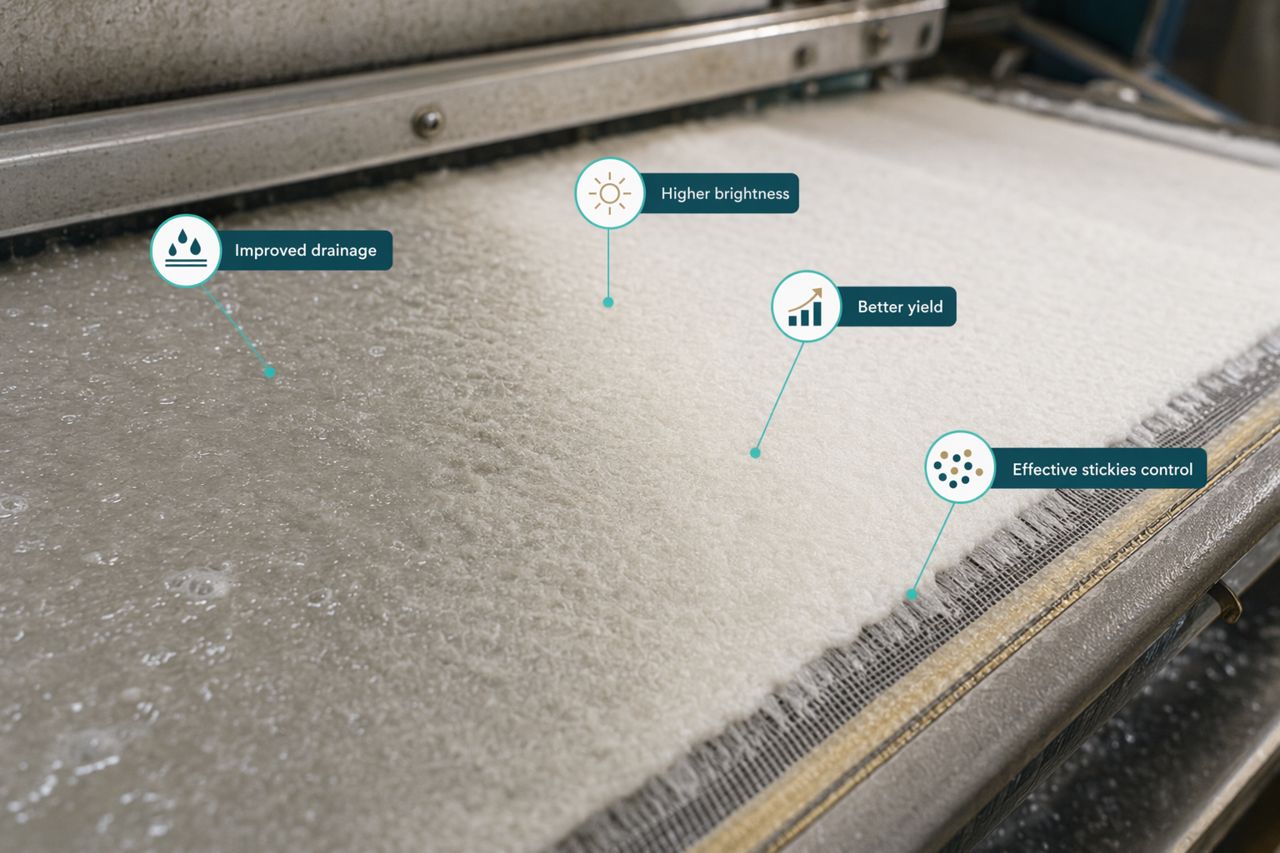
- Recommendations aligned with brightness, stickies, drainage, yield, and chemical-use objectives
- Support for lab screening, machine trial planning, and scale-up review
- Clear trial endpoints before the product is introduced
- No generic one-size-fits-all deinking claim
Request a Quote
To recommend the right enzyme route, Pulprift needs a short process snapshot.
Include the following in the request form:
- Furnish types and approximate blend range
- Current deinking stages and proposed addition point
- Main pain point: brightness, ink specks, stickies, drainage, yield, deposits, foam, or chemical cost
- Process pH and temperature range at the addition point
- Current chemistry used in pulping, flotation, washing, and deposit control
- Trial volume, target timeline, and purchasing contact
Submit the on-site request a quote form and Pulprift will respond with a furnish-based recommendation for mill validation.