Lipase for Ink, Oil, and Stickies Challenges in Recycled Paper Mills
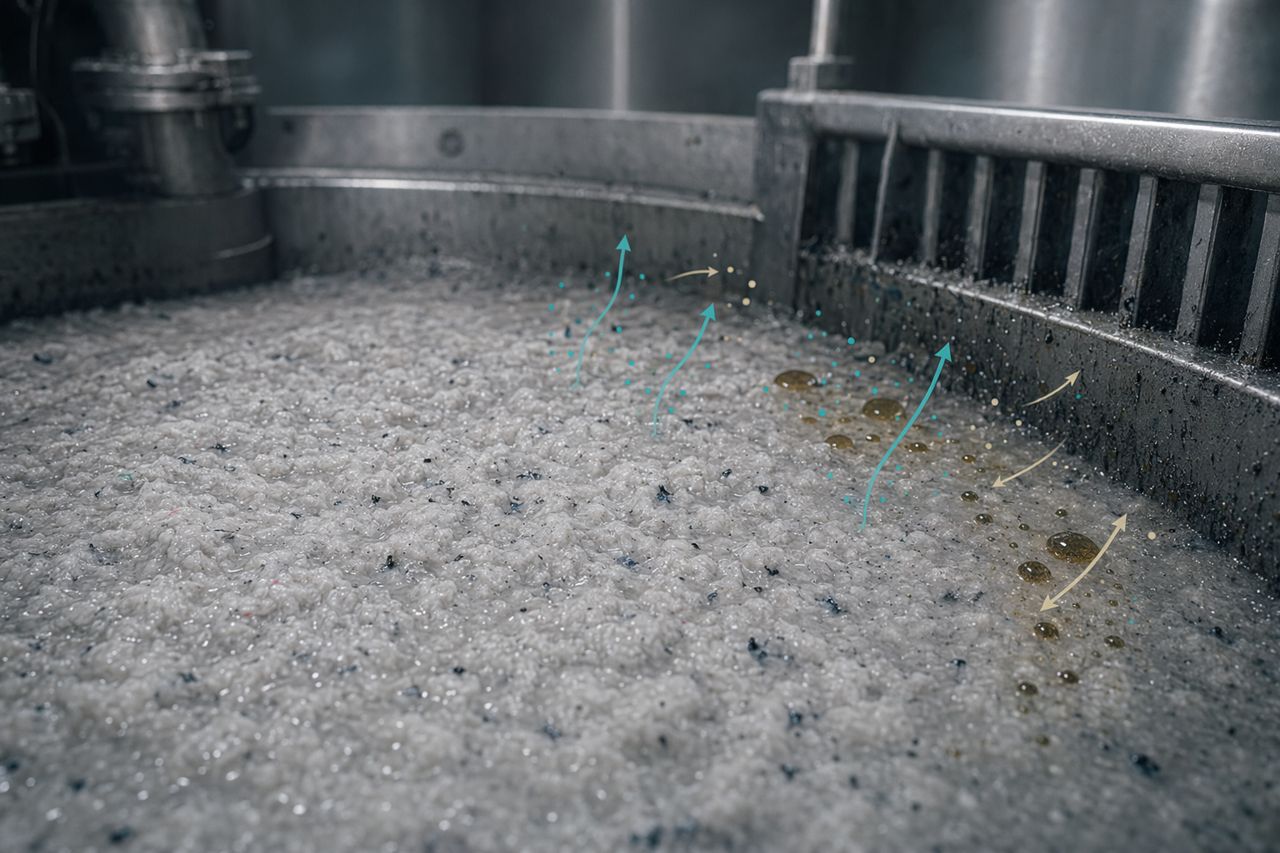
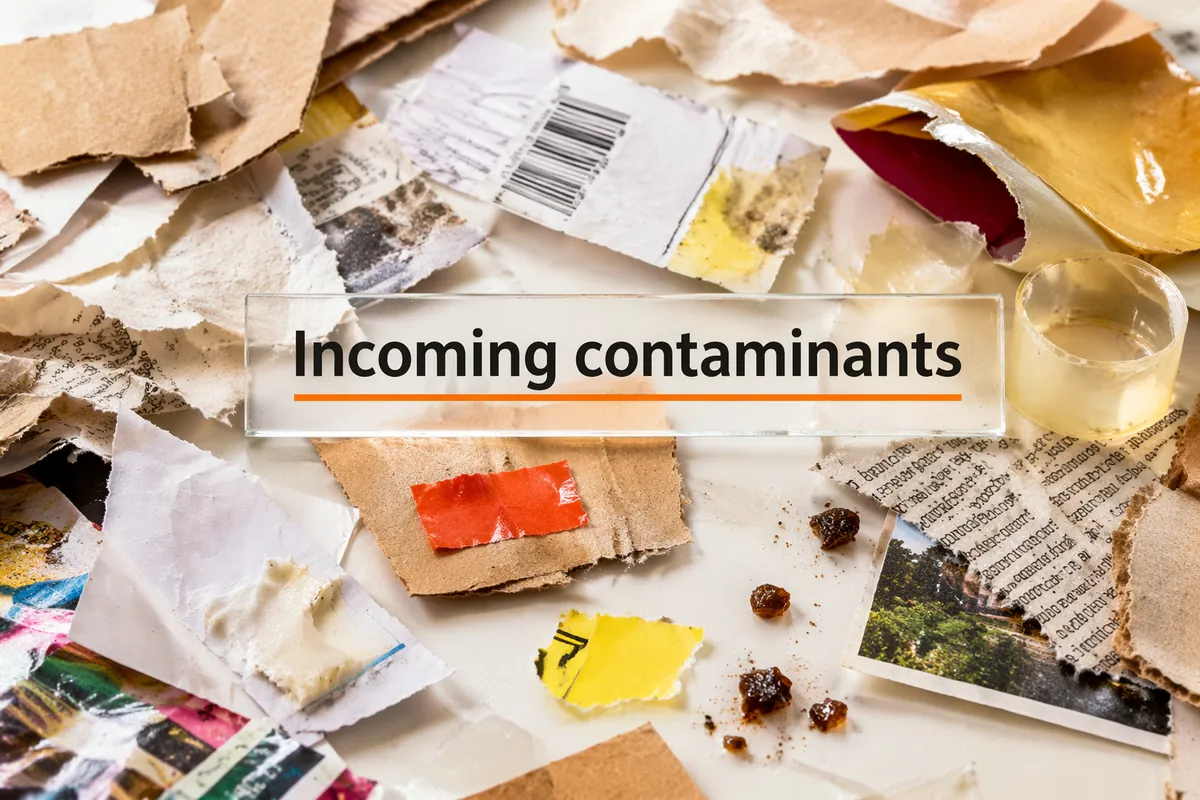
Recovered furnish does not arrive clean. It brings oily ink systems, pressure-sensitive adhesives, coating residues, waxes, fillers, and unknown chemistry from multiple collection streams. When hydrophobic contaminants stay active in the loop, they show up as stickies, foam instability, deposits, drainage drag, sheet defects, felt loading, and unplanned washups.
Enzymesfield supplies lipase and stickies-control enzymes wholesale and in bulk, to mills that need tighter control of fat- and oil-based contaminants in recycled paper production and to the paper-chemical distributors and resellers who supply them. Our role is practical: help your team evaluate an enzyme program that fits the pulper, dump chest, flotation, washer, disperser, or approach-flow reality you already operate.
Wholesale and bulk supply. Request a quote. For paper and board manufacturers, paper-chemical resellers and distributors, and biotech formulators. Send the product or the stickies problem to solve, the quantity, and the delivery destination; pricing, pack format and lead time are quoted per order. Request a quote
What lipase targets in a recycled fiber system
Lipase acts on lipid-rich and ester-containing contaminants that can contribute to hydrophobic load in deinking and recycled furnish loops. In practical mill language, that means support for systems challenged by:
- Oily or resinous ink carryover
- Fatty acid ester residues
- Wax and grease-associated contamination
- Adhesive-related hydrophobic particles
- Mixed office waste and packaging streams with variable stickies load
- Deposit tendency in chests, screens, cleaners, wires, felts, and rolls
- Flotation burden when ink and oil release is inconsistent
Lipase is not a stand-alone fix for every stickies issue. It is most useful when the problem includes an oil, fat, ester, or hydrophobic contaminant fraction that can be modified before it agglomerates, deposits, or travels deeper into the machine system.
What recycled-board mills report: breaks, mesh fouling and holes
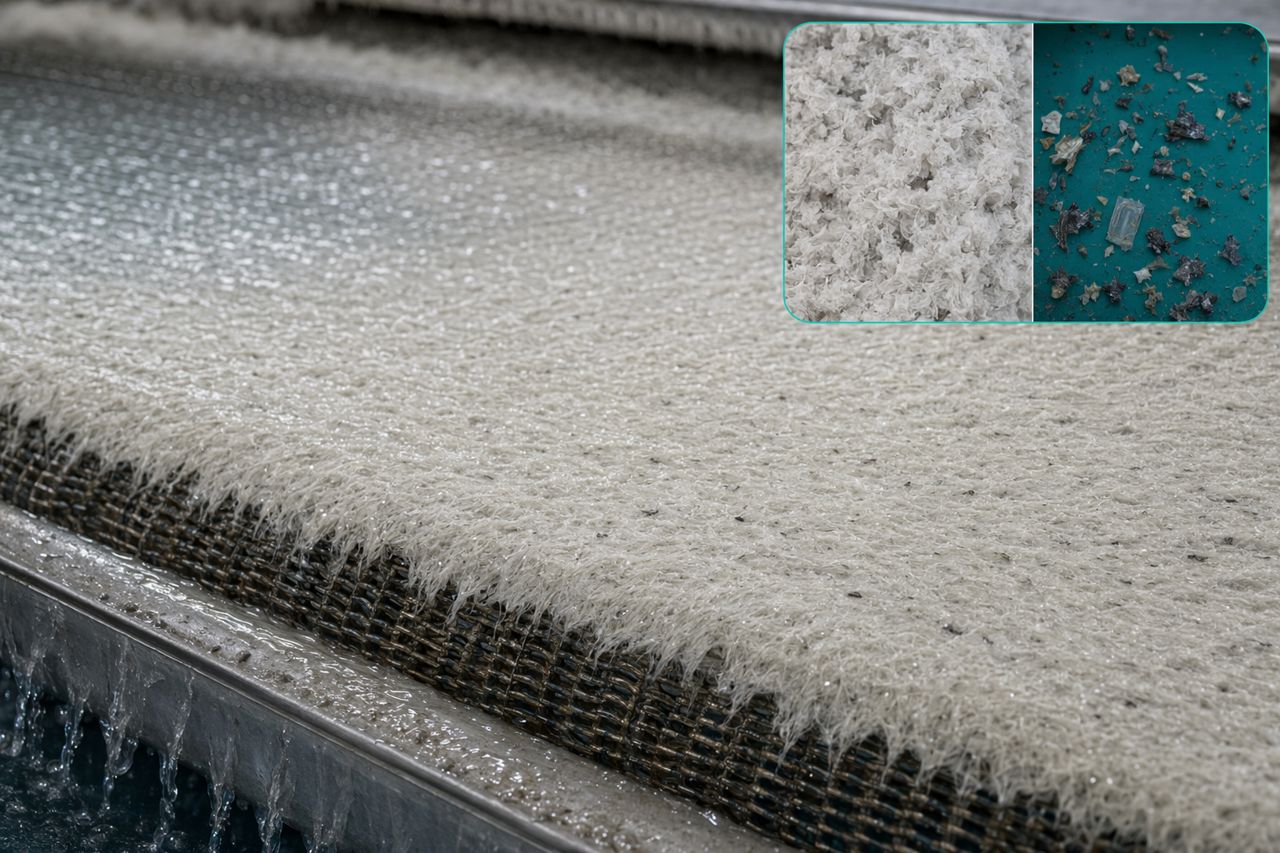
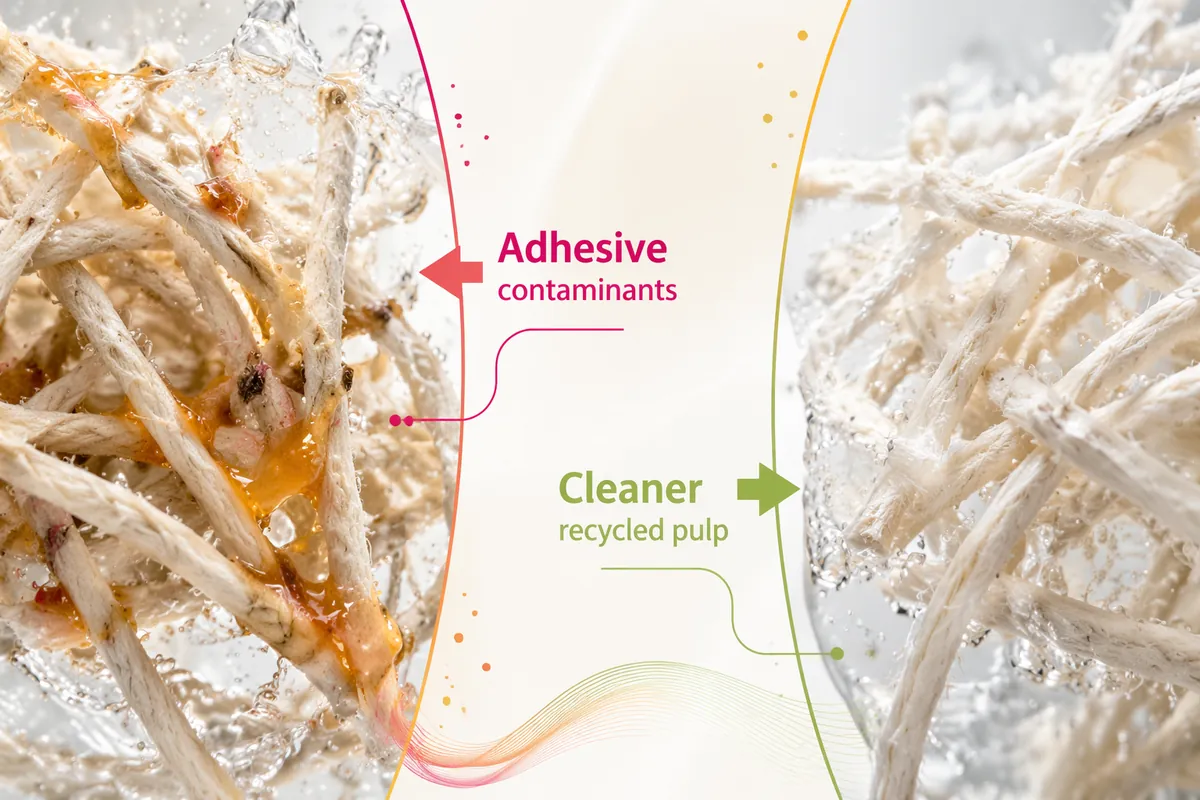
Mills running waste paper describe the stickies problem in production terms, not chemistry: the sheet breaks often, sticky material builds up on the forming mesh, and the finished paper shows holes and stains. Their experience is that water treatment alone does not fix it, because the stickies are carried in with the recovered paper and deposit on screens, mesh and equipment until the line jams.
Which grades and machines they are aimed at
Stickies-control enzymes target deposits formed while pulping OCC, mixed office waste (MOW), old magazines (OMG) and old newspapers (ONP), with the goal of higher paper-machine efficiency and better product quality. They suit papermaking on secondary-fibre pulp, such as corrugating medium and boxboard.
Typical operating window
| Parameter | Typical value |
|---|---|
| Temperature | 35 to 65 °C |
| pH | 6.0 to 10.0 |
| Reaction time | 45 to 90 minutes |
| Dose | 100 to 200 g per tonne of dry pulp |
Treat the dose as a starting band for a trial and state your demand in tonnes of dry pulp.
What success looks like, in the mill's own numbers
The outcomes mills look for are fewer paper breaks, a cleaner sheet with fewer stains and holes, longer mesh life, higher machine efficiency and lower production cost. Log those same numbers against a baseline period: breaks per day, mesh cleaning intervals, hole and spot counts, machine efficiency.
Mill outcomes Enzymesfield helps evaluate
A well-placed lipase program can support measurable operating improvements across deinking and recycled paper lines.
Stickies and deposit control
The commercial target is fewer tacky deposits and less hydrophobic agglomeration. Mills typically evaluate success through deposit counts, screen and cleaner behavior, downtime history, roll cleaning frequency, felt condition, and sheet defect trends.
Improved ink and contaminant release
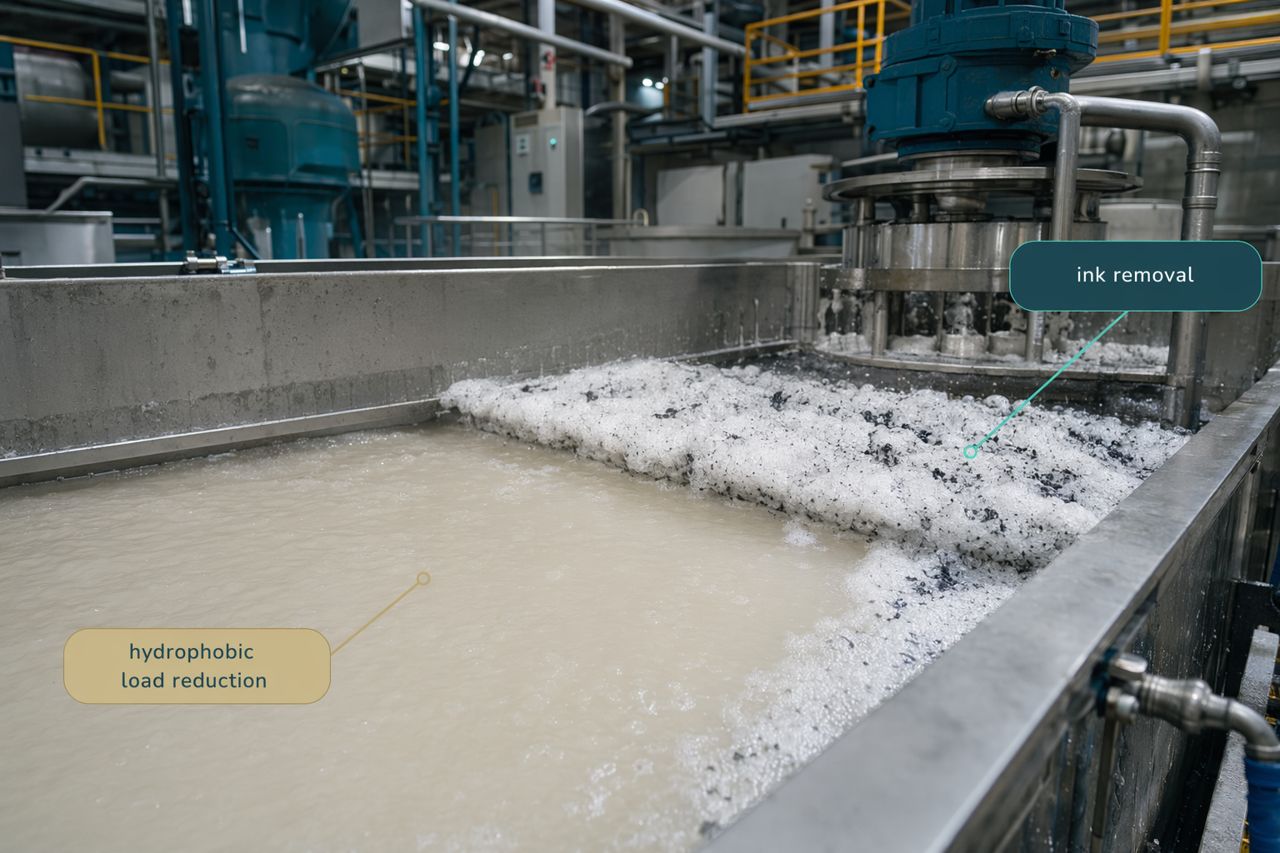
In deinking systems, lipase can help condition oily ink films and contaminant interfaces so downstream flotation, washing, and cleaning stages work with less interference.
More stable drainage and runnability
Hydrophobic load can slow drainage and increase variability. By reducing contaminant interference upstream, Enzymesfield lipase programs may support steadier sheet formation, better water release, and fewer wet-end upsets.
Chemical reduction opportunities
Some mills use enzyme conditioning to reduce dependence on harsh chemistry, solvent-heavy cleaning routines, or aggressive dispersant strategies. The goal is not to remove your existing chemistry blindly. The goal is to identify where enzyme support allows safer reduction without sacrificing brightness, yield, cleanliness, or runnability.
Lower downtime risk
Deposit-related stops are expensive because they interrupt production and maintenance planning. Lipase programs are often justified when the cost of deposits, washups, defect claims, or furnish variability is larger than the enzyme spend.
Where lipase is typically applied
Enzymesfield works with your team to choose a dosing point that gives the enzyme time to contact contaminants before the main separation or deposition risk occurs.
Common evaluation points include:
- Pulper or pulper discharge
- Dump chest or blend chest
- Pre-flotation conditioning stage
- Thick stock loop before washing or screening
- Recovered fiber storage chest where retention time is available
- Targeted trial point before a recurring deposit zone
The best point depends on furnish mix, pH, temperature, retention time, shear, surfactant package, biocide program, and where the defect or deposit first appears.
Practical application window
Enzymesfield lipase programs are selected around the operating conditions of the mill, not forced into a lab-only ideal. During a quote or trial discussion, we review:
- Furnish source and grade mix
- Deinking line layout
- Pulper temperature and retention time
- System pH and alkalinity
- Ink type and adhesive load
- Existing surfactants, caustic, peroxide, silicate, dispersants, and fixatives
- Flotation and washing arrangement
- Target KPIs: brightness, ERIC trend, speck count, stickies count, drainage, yield, downtime, and cleaning frequency
From there, we recommend a product fit and a practical trial plan that your operators can run without disrupting the line.
When a lipase program makes sense
Consider Enzymesfield when your recycled paper mill is seeing one or more of the following:
- Stickies are increasing with furnish variability
- Oily ink carryover is limiting deinking performance
- Deposits are forming after pulping, screening, or flotation
- Drainage slows when recovered fiber quality drops
- Cleaning frequency is rising on wires, felts, rolls, or chests
- Brightness gains are inconsistent despite stable chemical addition
- Dispersant or caustic use is increasing without solving the root issue
- Defect-related broke or customer complaints are tied to hydrophobic contamination
Trial structure for mill-floor proof
Enzymesfield supports controlled mill trials with clear before-and-after tracking. A practical trial may include:
- Baseline period — document furnish mix, chemistry, brightness, stickies, specks, drainage, downtime, and deposit cleaning frequency.
- Controlled enzyme introduction — add lipase at the selected point while holding other variables as steady as practical.
- Operator observations — capture screen load, flotation behavior, foam stability, deposit tendency, and sheet cleanliness.
- KPI review — compare runnability, defect trend, chemical demand, yield impact, and operating cost.
- Optimization — adjust product choice, dose strategy, contact time, or application point based on mill data.
We do not ask your team to rely on generic claims. The program has to prove value against the costs and constraints of your line.
Product fit and supply support
Enzymesfield can support mills looking for lipase solutions in liquid or process-ready formats depending on storage, dosing equipment, and handling requirements. Product recommendations are based on compatibility with your furnish and operating window.
For B2B purchasing teams, we can provide:
- Technical product recommendation for your deinking line
- Commercial quotation based on expected usage and supply requirements
- Trial planning support for pulping and deinking operations
- Documentation for handling, storage, and plant review
- Scale-up guidance after a successful production trial
Why Enzymesfield
Enzymesfield is built for recovered-fiber operations. We understand that enzyme value is judged by production reality: cleaner loops, fewer deposits, stable deinking, reduced downtime, manageable chemical cost, and paper that meets specification.
You do not need a broad enzyme catalog. You need a supplier that can speak to recycled furnish behavior, contaminant load, process constraints, and mill-floor economics.
Request a quote
If your mill is managing oily inks, adhesive residues, hydrophobic stickies, or deposit-related downtime, or you supply stickies-control chemistry to mills that are, send Enzymesfield your process details and target outcomes.
Use the on-site request form and include:
- Product: lipase, a stickies-control enzyme, or the problem to solve
- Quantity: trial volume or estimated monthly usage
- Destination: the country and site the order ships to
- Recycled grade and furnish mix
- Main pain point: ink, stickies, deposits, drainage, brightness, or downtime
- Current deinking and cleaning stages
- Operating pH and temperature range
- Current chemistry program, if available